
A self-imposed dilemma
Due to their reputation, Afghan Taliban face major challenges in securing a role for Afghanistan in region’s security and economic future
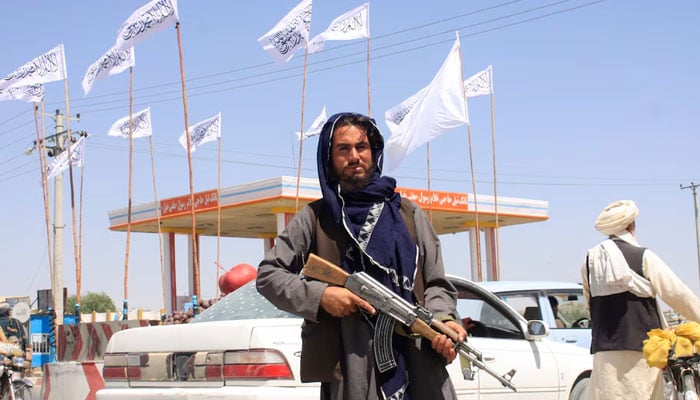
After the Taliban takeover in 2021, the new rulers wished to adopt a foreign policy of neutrality and promote Afghanistan as a hub of interconnectivity for trade with neighbouring states.
The new regime’s aspirations for cross-border railways, pipelines and electricity corridors met a serious blow due to apprehensions among its neighbours regarding any diplomatic venture with the Taliban regime. Due to their reputation, the Afghan Taliban face major challenges in securing a role for Afghanistan in the region’s security and economic future as well.
In their first months after seizing power, not a single foreign government or multilateral organisation acknowledged the Taliban-controlled government without demanding concessions on women’s rights and other matters. This enraged the Taliban’s conservative elements, dividing them into two factions: one, centred in the Kabul-based government, sought engagement with the West; the other, hardliner Kandhari group led by Hibatullah Akhundzada, rejected this idea. This camp ensured its followers that the Taliban regime would not concede to any pressure of the West.
Although regional actors also criticized the Taliban’s discrimination against women, they opted to engage with Kabul due to varied considerations – this was an issue-based engagement rather than emulating the West’s policy of total alienation. Having re-established a diplomatic presence in Kabul, many regional countries welcomed the reciprocal gesture of the Taliban, claiming that such representation does not amount to recognition but is a procedural compulsion for ensuring crucial engagement with Afghanistan.
Regional countries’ momentary relations are contingent upon the Afghan Taliban’s concerted efforts to remove the reasons behind the serious apprehensions of their neighbours. The region’s diplomatic stance may not be confounded for full recognition; even calling it ‘normalization’ may be a distant reality. Regional countries are wary of the ‘exclusionary’ nature of the cabinet in Kabul which excludes political and ethnic factions with which they enjoy historical ties. On the contrary, the Taliban discourage the region’s ideas about including politicians from non-Taliban factions; they have continued to extend a mere promise to ‘broaden’ their government in the future without providing an explicit roadmap.
Given Afghanistan’s turbulent history, regional governments see the country from a security prism, what with the presence of transnational jihadist groups there including IS-KP, Lashkar-e-Taiba, Hizbut Tahrir, Tehreek-e-Taliban Pakistan (TTP) and many other smaller groups. Neighbouring countries have frequently raised concerns about the Taliban’s willingness or ability (or not) to rein them in. They are also concerned about the rise of an Islamist government in their neighbourhood which could galvanize Islamists within their own borders.
The TTP was already becoming more aggressive before 2021, but the Afghan Taliban’s takeover appears to have emboldened the group. Jailbreaks during the Taliban’s sweep to power set free many TTP prisoners, allowing fighters to leave Afghanistan and resume their war on Pakistan. Since then, the group has conducted a series of deadly attacks in Pakistan. In response, Islamabad has pushed hard for Kabul to crack down on the group – but contrarily, the Taliban deny the TTP’s presence in Afghanistan. Faced with the Taliban’s refusal of repeated requests for action against the TTP, Pakistan even conducted air and artillery strikes inside Afghanistan.
The other main area of regional cooperation is economics. Protracted war in Afghanistan deferred ideas of increasing trade corridors for the rival of the economy. Still, varying factors constrain economic collaboration between Kabul and the region. Economic restrictions and sanctions by the West continue to suffocate private investment.
The absence of a legal framework in Afghanistan continues to demoralize the private sector in the country. Millions of Afghans suffer extreme poverty at a time when Western donors, cagey of the Taliban’s discrimination against women, are moving away, resulting in billions of dollars cut from humanitarian budgets.
The Afghan Taliban have started relying on regional countries for the economic uplift of Afghanistan. Trade relations with neighbouring countries are adversely influenced by the Taliban’s consistent indifference to the resolution of a multitude of concerns. Some of the Taliban’s actions, including building dams without consent of downstream countries, have also caused tensions with neighbours, particularly Iran and Uzbekistan. In such an atmosphere, regional states might be tempted to scale back their ambitions for engagement with the Taliban.
Many steps towards regional cooperation do not involve Western donors, but the stakes of those countries are obstacles on the road to more functional relations between Kabul and regional capitals. Whether it is a vote at the World Bank on a water project, or permission to send equipment to Afghan Taliban border guards despite sanctions, much progress depends on Western support and approvals.
A Taliban regime that values human rights might be welcomed by the world someday. But it is not possible in the foreseeable future which means that Afghanistan is likely to be ruled by an unrecognized regime for years to come. Its people should not be held hostage to this reality. For the sake of the destitute millions in Afghanistan, the Afghan Taliban need to take stock of the situation and extend a sincere hand to rest of the world in light of spirit of the Doha Accord to which they are a signatory.
The writer is a freelance contributor and writes on issues concerning national and regional security. She can be reached at: omayaimen333@gmail.com







-
 Lana Del Rey Announces New Single Co-written With Husband Jeremy Dufrene
 -
 Ukraine-Russia Talks Heat Up As Zelenskyy Warns Of US Pressure Before Elections
 -
 Lil Nas X Spotted Buying Used Refrigerator After Backlash Over Nude Public Meltdown
 -
 Caleb McLaughlin Shares His Resume For This Major Role
 -
 King Charles Carries With ‘dignity’ As Andrew Lets Down
 -
 Brooklyn Beckham Covers Up More Tattoos Linked To His Family Amid Rift
 -
 Shamed Andrew Agreed To ‘go Quietly’ If King Protects Daughters
 -
 Candace Cameron Bure Says She’s Supporting Lori Loughlin After Separation From Mossimo Giannulli
 -
 Princess Beatrice, Eugenie Are ‘not Innocent’ In Epstein Drama
 -
 Reese Witherspoon Goes 'boss' Mode On 'Legally Blonde' Prequel
 -
 Chris Hemsworth And Elsa Pataky Open Up About Raising Their Three Children In Australia
 -
 Record Set Straight On King Charles’ Reason For Financially Supporting Andrew And Not Harry
 -
 Michael Douglas Breaks Silence On Jack Nicholson's Constant Teasing
 -
 How Prince Edward Was ‘bullied’ By Brother Andrew Mountbatten Windsor
 -
 'Kryptonite' Singer Brad Arnold Loses Battle With Cancer
 -
 Gabourey Sidibe Gets Candid About Balancing Motherhood And Career