
Cost of reversal
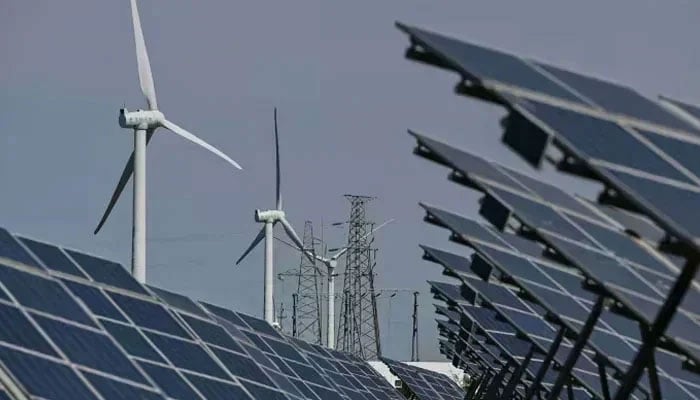
Pakistan’s electricity consumers were encouraged to adopt solar generation as a way to increase power generation
As Pakistan’s finance managers crunch numbers to raise pitifully low national revenue, quick policy reversals to meet the gap will inevitably cause more harm than good.
Tragically, however, the ongoing practice is in line with the record of the ruling structure, where shortcuts to tackle the immediate rot rather than embracing long overdue painful reforms remains the norm. Within this framework, the reported plan to force Pakistan’s solar energy consumers to scale down the benefits they reap from existing and future generation says much about a wider crisis surrounding the country.
In brief, Pakistan’s way forward will just not lead towards greater stability surrounding the economy, irrespective of the costs enforced on consumers – including solarized ones.
In recent years, Pakistan’s electricity consumers were encouraged to adopt solar generation as a way to increase power generation, using a natural source with no fuel cost involved. The practice has clearly become popular with a variety of consumers, from the high end urban ones to rural dwellers. The idea of ‘net metering’ as repeatedly mentioned encouraged consumers to sell the power they generated to the national grid, while getting billed for any power consumed on top of what was sold. In many instances, consumers who ran surpluses were given an electricity credit for future use.
Many consumers adopted the practice with large upfront investments that required a one-time hefty cost for a longer term gain. But as solarization grew across Pakistan, the electricity authorities realized the benefit for consumers, with reduced electricity purchases from a fundamentally flawed transmission system.
Saddled with expensive electricity supplied by the mainly oil based independent power producers or IPPs which jumped in the fray since the 1990s, Pakistan’s power system has indeed become yet another white elephant.
Three flaws have devastated Pakistan’s electricity network: First, the transmission system armed with reported losses of up to 30 per cent is inherently inefficient, burdened with governance related challenges that need to be fixed. That however must not occur while compromising the interests of solar consumers.
Second, Pakistan’s economic slowdown with power consumers in industry and agriculture reducing their purchases hardly helps to raise the electricity revenue. On the contrary, a faster paced economic growth would have brought in more revenue and possibly allowed more profitable sectors to bear a higher electricity tariff than domestic consumers.
Finally, the rush to plug the large hole in Pakistan’s revenue is fundamentally driven by a continued national failure to lift the country’s all too unimpressive tax collection. With less than two per cent of Pakistan’s population already in the income tax net, there is indeed a periodic and clumsy rush to slap the ones already paying their dues. And it’s hardly surprising that government after government has used indirect taxes to narrow the gap, rather than aggressively chasing those who practically remain immune from paying their dues.
The idea of forcing solar energy consumers to receive fewer benefits from investments, either already made or in the pipeline, must be seen within the framework of a wider national failure.
Changes to the benefits of solarization inherently carry two related risks for Pakistan’s future. On the one hand, reported changes in this sector will once again demonstrate that incentives offered under one policy in a given year carry no assurances of remaining in place for the future. Consequently, stakeholders such as those banking on solar energy benefits can just not rely on official promises.
On the other hand, questions must be asked over the benefits for large electricity producers who arrived under the IPP policy of the 1990s, and continue gain from a regime that reportedly remains favourable for them. Any discussion on this subject well deserves a detailed debate on the floor of parliament, with any planned rationale for reducing the benefits to solar users explained in detail.
Going forward, the backward and forward policy shifts in a range of sectors, including solar power generation and supply, indeed raise a compelling question over the virtual absence of a centralized focal point for the economy’s direction. In yesteryears, the direction of Pakistan’s policymaking was just incomprehensible without a central oversight by the National Planning Commission in Islamabad. Clearly, Pakistan over time has departed far from that era with even the provinces – notably Punjab – apparently making policies without any reference to a national direction.
It is a tragic directional shift that has indeed cost Pakistan dearly. The idea of policy flip-flops can just not become the basis for a longer-term, progressive and powerful economic change. On the contrary, policies devised outside a national mainstream carry the powerful risk of a back and forth trend such as witnessed in the solar sector.
The focus must remain on Pakistan’s long-term future for the benefit of its mainstream population rather than quick fixes without enduring change. Eventually, an investment starved country can just not risk policy failures as it seeks a lift for its economic future.
The writer is an Islamabad-basedjournalist who writes on political and economic affairs. He can be reached at: farhanbokhari@gmail.com







-
 Bad Bunny Headlines Super Bowl With Hits, Dancers And Celebrity Guests
 -
 Insiders Weigh In On Kim Kardashian And Lewis Hamilton's Relationship
 -
 Prince William, Kate Middleton Private Time At Posh French Location Laid Bare
 -
 Stefon Diggs Family Explained: How Many Children The Patriots Star Has And With Whom
 -
 ‘Narcissist’ Andrew Still Feels ‘invincible’ After Exile
 -
 Shamed Andrew ‘mental State’ Under Scrutiny Amid Difficult Time
 -
 Bad Bunny's Super Bowl Halftime Show: What Time Will He Perform Tonight?
 -
 Where Is Super Bowl 2026 Taking Place? Everything To Know About The NFL Showdown
 -
 Chris Pratt Explains Why He And Katherine Schwarzenegger Did Premarital Counseling
 -
 Drake 'turns Down' Chance To Hit Back At Kendrick Lamar At Super Bowl
 -
 Sarah Ferguson Had A ‘psychosexual Network’ With Jeffrey Epstein
 -
 Miranda Kerr Shares The One Wellness Practice She Does With Her Kids
 -
 Czech Republic Supports Social Media Ban For Under-15
 -
 Khloe Kardashian Shares How She And Her Sisters Handle Money Between Themselves
 -
 Prince William Ready To End 'shielding' Of ‘disgraced’ Andrew Amid Epstein Scandal
 -
 Chris Hemsworth Hailed By Halle Berry For Sweet Gesture