
Why China is reluctant to make a much-needed shift
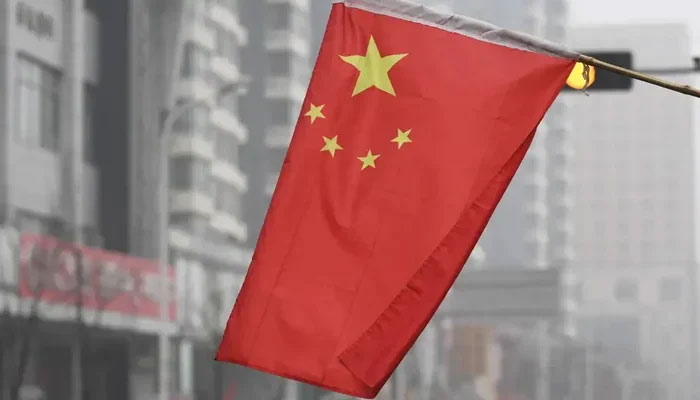
For investors watching China, there have been some positive recent trends. China’s exports have started to pick up, supporting economic growth despite a prolonged property slump and flagging consumption. Chinese policymakers may feel their factory-driven growth strategy is being vindicated.
But an important broader structural problem remains largely unaddressed. Even though the government has rolled out policy in attempts to place a floor under the tanking property sector, it has stubbornly refused to genuinely empower consumers, through either fiscal transfers to households or reforms that buttress public services and social safety.
A programme to incentivise households to trade in and upgrade durable goods — including cars — disappointed by being too small and too prescriptive and ultimately amounts to a detour to again pump up industrial production. By doubling down on supply-side support, China may exacerbate overcapacity at home and trade frictions globally. The country’s leaders are willing to stomach such risks because politics and geopolitics matter more than economics.
Chinese officials probably took note that robust support for household income had prepared a number of western economies for post-pandemic lift-off, but they probably also noticed with alarm that demand on steroids has supercharged inflation, in turn fuelling voter discontent and populism.
A principal political obsession of China’s ruling communist party is to avoid a repeat of the 1989 uprising. The mass protests erupted partly because of runaway prices of consumer staples. The causes of inflation then were unique, relating to the transition to a more market economy. But the spectre of a repeat still worries Beijing. “He who has been bitten by a snake recoils from a rope,” goes a Chinese saying.
More fundamentally, China’s political-economic system cannot countenance scattering resources for individual consumption. A defining feature of such a regime, with a Leninist core, is the mobilisation of resources for social-economic transformation. China’s ruling elite pride themselves on the system’s proven ability to “amass resources to endeavour big feats”. In their belief, it is this ability that has enabled China to modernise infrastructure, accelerate industrialisation, escape poverty and create a developmental miracle.
Today’s rulers of China see cautionary tales in consumer-driven American capitalism: deindustrialisation, over-financialisation, destabilising booms and busts, social atomisation, populist ferment, and digital platforms with wealth and power to rival the state. China’s President Xi Jinping prefers to mobilise resources to power the “real economy”, synonymous in China with manufacturing.
Manufacturing can help ensure self-sufficiency, prized by Chinese leaders since Mao Zedong. Mao’s successors relaxed on that fixation, not because they became true converts of the economics of comparative advantages, but out of necessity to attract western capital and technology.
Unlike other industrialised economies, which tend to outsource legacy industries as their companies move up the value chain, China has never truly trusted transnational division of labour. Its strategists have always ominously warned that the “strategic window of opportunity”, during which capitalist democracies willingly shared the fruit of trade and investment with a rival such as China, would eventually close. They can now claim prescience as the US and its allies restrict technology, investment and market access to Chinese companies.
This fear has driven Beijing to cultivate the world’s largest and most comprehensive industrial supply chain. Chinese policymakers boast of running the only country in the world that produces in every sector in the UN’s International Standard Industrial Classification.
The country’s industrial strategy aspires to propel Chinese manufacturers up the value chain to dominate the domestic market and expand global market shares.
Foreign competitors not vanquished should be locked into China’s ever more sophisticated and efficient supply chain.The trade-in programme for vehicles and appliances thus makes sense in China’s political economy. Consumption stimulus must be channelled into manufacturing. After all, the Communist party is supposed to draw its legitimacy and strength from workers on factory floors, and Xi aspires to build a manufacturing superpower rather than a rich consumer society.







-
 Winter Olympics 2026: When & Where To Watch The Iconic Ice Dance ?
 -
 Melissa Joan Hart Reflects On Social Challenges As A Child Actor
 -
 'Gossip Girl' Star Reveals Why She'll Never Return To Acting
 -
 Chicago Child, 8, Dead After 'months Of Abuse, Starvation', Two Arrested
 -
 Travis Kelce's True Feelings About Taylor Swift's Pal Ryan Reynolds Revealed
 -
 Michael Keaton Recalls Working With Catherine O'Hara In 'Beetlejuice'
 -
 King Charles, Princess Anne, Prince Edward Still Shield Andrew From Police
 -
 Anthropic Targets OpenAI Ads With New Claude Homepage Messaging
 -
 US Set To Block Chinese Software From Smart And Connected Cars
 -
 Carmen Electra Says THIS Taught Her Romance
 -
 Leonardo DiCaprio's Co-star Reflects On His Viral Moment At Golden Globes
 -
 SpaceX Pivots From Mars Plans To Prioritize 2027 Moon Landing
 -
 J. Cole Brings Back Old-school CD Sales For 'The Fall-Off' Release
 -
 King Charles Still Cares About Meghan Markle
 -
 GTA 6 Built By Hand, Street By Street, Rockstar Confirms Ahead Of Launch
 -
 Funeral Home Owner Sentenced To 40 Years For Selling Corpses, Faking Ashes