
The value of domestic work
Domestic work is severely undervalued in Pakistan, with most workers being paid below the minimum wage
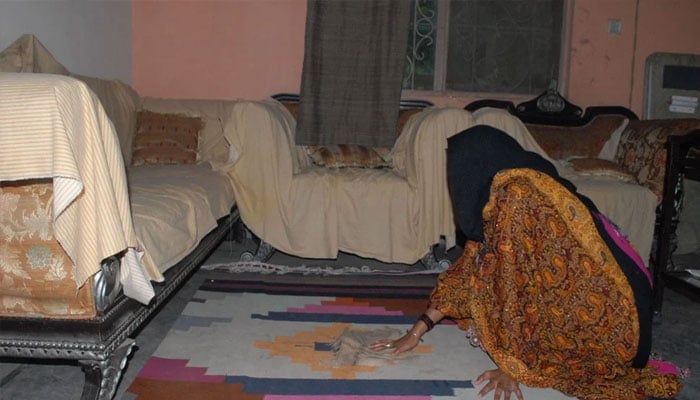
One of the perks of living in Pakistan is often cited to be the cheap labour people can hire for domestic work. Families living in urban centres tend to hire domestic workers for household chores like cooking, cleaning, ironing, childcare and eldercare.
According to the International Labour Organization (ILO), there are roughly 8.5 million domestic workers in Pakistan. While our wellbeing heavily rests on the labour of domestic workers, we are unwilling to give fair value for their work.
Domestic work is severely undervalued in Pakistan, with most workers being paid below the minimum wage. This entire sector is largely informal, with workers working under verbal agreements with stringent working conditions.
The work involves a lot of drudgery; the hours are long; and the leaves are meagre. To add to this, they are also at risk of physical and verbal abuse by their employers.
These workers settle for less and often later demand advance salaries or take loans from their employers to maintain cash flow and meet their household requirements. Most are also heavily reliant on the charity of their employers and often wait for special occasions and festivals like Ramazan and Eid to build up a reserve. Both these factors indicate that the compensation or salary alone is not enough to meet their needs fully.
Why do we undervalue domestic work? Traditional gender roles have dictated that women of the household actually provide this labour for free, and when we transitioned towards paying for this work, we allotted it a low economic value.
The compensation is also gendered; we are willing to pay men more for the same work than women, often citing reasons like they are the primary breadwinners or perform better quality of work or have stronger work ethic.
There is no recognition that a man’s uninterrupted work ethic may rest on the labour of a woman taking care of his family back home. Women’s income is seen as supplementary to support household expenses without the recognition that they may still be the primary breadwinners or be running single-family households. There is also little to no recognition that this work requires a certain level of skill. There is little additional compensation for a more skilled or experienced worker.
We are in the midst of a cost of living crisis which is hitting the poor the hardest. We are witnessing rising electricity, gas and grocery bills. The difference is that the privileged can cut into their savings or can cushion the marginal difference but the poor cannot. People cannot possibly envision a better life for their kids when they are struggling to feed them
Let’s adequately compensate and respect domestic work.
The writer is a policy engagement
advisor at Oxfam.







-
 Bridgerton’s Michelle Mao On Facing Backlash As Season Four Antagonist
 -
 King Charles Gets New ‘secret Weapon’ After Andrew Messes Up
 -
 Shia LaBeouf Makes Bold Claim About Homosexuals In First Interview After Mardi Gras Arrest
 -
 Princess Beatrice, Eugenie ‘strained’ As They Are ‘not Turning Back’ On Andrew
 -
 Benny Blanco Addresses ‘dirty Feet’ Backlash After Podcast Moment Sparks Online Frenzy
 -
 Sarah Ferguson Unusual Trait That Confused Royal Expert
 -
 Prince William, Kate Middleton Left Sarah Ferguson Feeling 'worthless'
 -
 Ben Affleck Focused On 'real Prize,' Stability After Jennifer Garner Speaks About Co Parenting Mechanics
 -
 Luke Grimes Reveals Hilarious Reason His Baby Can't Stop Laughing At Him
 -
 Why Kate Middleton, Prince William Opt For ‘show Stopping Style’
 -
 Here's Why Leonardo DiCaprio Will Not Attend This Year's 'Actors Award' Despite Major Nomination
 -
 Ethan Hawke Reflects On Hollywood Success As Fifth Oscar Nomination Arrives
 -
 Tom Cruise Feeling Down In The Dumps Post A Series Of Failed Romances: Report
 -
 'The Pitt' Producer Reveals Why He Was Nervous For The New Ep Of Season Two
 -
 Maggie Gyllenhaal Gets Honest About Being Jealous Of Jake Gyllenhaal
 -
 'Bridgerton' Star Luke Thompson Gets Honest About Season Five