
Unbearable heat
NDMA has announced that Pakistan may experience three heatwaves in different parts during next 25 days
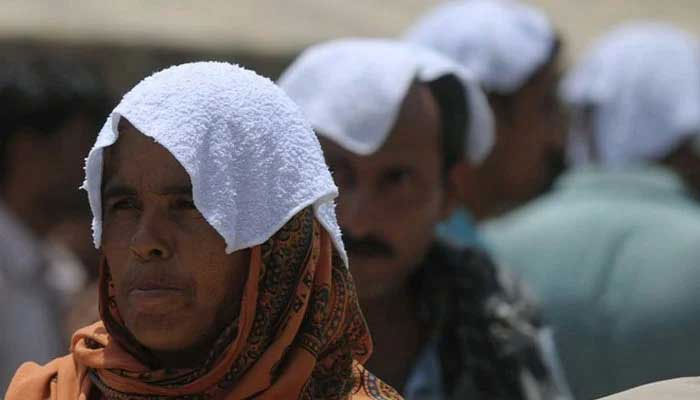
For years, scientists had kept warning people about the deleterious effects of their consumption habits on the environment. The relentless tree cutting, the excessive use of vehicles and preference for car-centric cities, and a shift to high-rise buildings with no proper space for plantation were bound to lead to where we are today: a sweltering summer. The National Disaster Management Authority (NDMA) has announced that Pakistan may experience three heatwaves in different parts during the next 25 days. The authority says that temperatures in the first spell of heatwaves will likely touch the 40 degrees Celsius mark, and that Umarkot, Tharparkar, Tando Allahyar, Matiari and Sanghar in Sindh and Bahawalpur and Rahimyar Khan in southern Punjab are likely to be worst affected by it. In the second phase (in late May or early June), temperatures are likely to go up to 45 degrees C. The third heatwave is expected during the first 10 days of June, and is likely to affect Tharparkar, Umarkot, Sanghar, Badin and Khairpur.
But are ordinary Pakistanis ready to bear the heat? In fact, a more pressing question is: can Pakistanis afford the cooling devices required to beat the heat? It seems like a page out of dark comedy that the NDMA’s warning coincides with the government’s announcement of increasing electricity prices – forcing people to reduce their reliance on electric appliances necessary for coping with the heat. This leaves low- and middle-income households without much use of appliances like ACs or refrigerators that can bring some respite to them. People in all parts of the country are protesting against unaffordable electricity bills. Recently, in AJK, violent protests erupted as citizens demanded the government to reduce electricity tariffs. In Balochistan, too, people took to the streets, asking authorities to convert tubewells to solar power to meet the people’s energy needs.
Given the risks that changing weather patterns hold, many experts are of the opinion that access to electricity should be considered people’s right, and arrangements should be made to ensure that no household is left behind without power. Now that the NDMA has announced sweltering temperatures for at least a month, it is the responsibility of the government to take the necessary steps to help people deal with this natural challenge. While access to electricity is a must, other measures like setting up relief camps in cities where the risk of heatwaves is high are also essential. Besides this, all private and public hospitals and healthcare units should be equipped with medicines required to treat people showing symptoms of heat stroke. Heatwaves are a natural disaster, and dealing with them will requires collective effort.







-
 Jennifer Hudson Gets Candid About Kelly Clarkson Calling It Day From Her Show
 -
 Shamed Andrew Was With Jeffrey Epstein Night Of Virginia Giuffre Assault
 -
 Shamed Andrew’s Finances Predicted As King ‘will Not Leave Him Alone’
 -
 Bad Bunny Faces Major Rumour About Personal Life Ahead Of Super Bowl Performance
 -
 Sarah Ferguson’s Links To Jeffrey Epstein Get More Entangled As Expert Talks Of A Testimony Call
 -
 France Opens Probe Against Former Minister Lang After Epstein File Dump
 -
 Last Part Of Lil Jon Statement On Son's Death Melts Hearts, Police Suggest Mental Health Issues
 -
 Leonardo DiCaprio's Girlfriend Vittoria Ceretti Given 'greatest Honor Of Her Life'
 -
 Beatrice, Eugenie’s Reaction Comes Out After Epstein Files Expose Their Personal Lives Even More
 -
 Will Smith Couldn't Make This Dog Part Of His Family: Here's Why
 -
 Kylie Jenner In Full Nesting Mode With Timothee Chalamet: ‘Pregnancy No Surprise Now’
 -
 Laura Dern Reflects On Being Rejected Due To Something She Can't Help
 -
 HBO Axed Naomi Watts's 'Game Of Thrones' Sequel For This Reason
 -
 King Charles' Sandringham Estate Gets 'public Safety Message' After Andrew Move
 -
 Lewis Capaldi Sends Taylor Swift Sweet Message After 'Opalite' Video Role
 -
 Brooklyn Beckham Plunges Victoria, David Beckham Into Marital Woes: ‘They’re Exhausted As It Seeps Into Marriage