
ECP reserves verdict on KP oath delay petition
The ECP director-general (law) argued that it was the fundamental responsibility of the commission to conduct elections
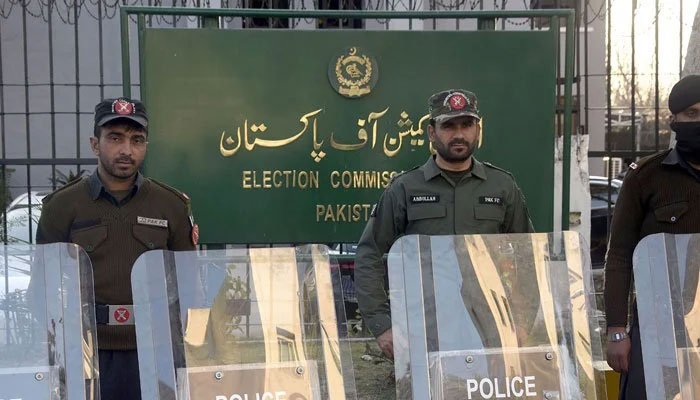
ISLAMABAD: The Election Commission of Pakistan (ECP) on Tuesday reserved its judgment on a petition filed against the delay in administering oath to the newly elected members of Khyber Pakhtunkhwa Assembly on reserved seats.
A full five-member bench, headed by Chief Election Commissioner Sikandar Sultan Raja, heard the petition.
The MPAs-elect Jamila Paracha, Afshan Hussain, and Amna Sardar. Faiza Malik, Shazia Jadoon, and Suresh Kumar attended the hearing. The petitioners argued before the bench that they were being denied the opportunity to take the oath as MPAs of Khyber Pakhtunkhwa.
Their counsel, Shah Khawar, explained that the election commission had issued a notification concerning the petitioners on reserved seats on March 4 and that it was the responsibility of the speaker of Khyber Pakhtunkhwa Assembly to convene the session and administer the oath. He emphasised that the speaker is constitutionally obligated to convene the assembly session and maintained that the Senate elections, scheduled for April 2, should be held only after the MPAs-elect are administered the oath.
In response, the CEC questioned how the election commission could instruct the speaker to administer the oath to the newly elected members on reserved seats. A representative from the Khyber Pakhtunkhwa Assembly said that the speaker had not refused to administer the oath and even argued that the summoning of the assembly session by the governor was illegal.
ECP member Ikramullah Khan inquired about the consequences if the speaker did not obey the orders of the election commission: Could the election commission take action against the Khyber Pakhtunkhwa Assembly speaker for not administering the oath? Advocate Shah Khawar argued that the election commission could not interfere in the internal proceedings of the assembly session. The secretary of the provincial assembly pointed out that it needed to be examined whether the governor had the authority to summon the assembly session without a summary from the relevant authorities.
The ECP director-general (law) argued that it was the fundamental responsibility of the commission to conduct elections. Moreover, the electoral body has jurisdiction over oath-taking procedures and could issue directives concerning the oath-taking process of members and intervene as well if there are any delays in the administration of oath.







-
 New Guest Host Announced For The Kelly Clarkson Show
 -
 Why Prince William’s Statement Over Jeffrey Epstein ‘says A Lot’
 -
 Paul McCrane Reveals Why Playing Jerks Became His Calling Card
 -
 Prince William, Kate Middleton Thrashed For Their ‘bland’ Epstein Statement
 -
 Bad Bunny Stunned Jennifer Grey So Much She Named Dog After Him
 -
 Kim Kardashian's Plans With Lewis Hamilton After Super Bowl Meet-up
 -
 Prince William Traumatised By ‘bizarre Image’ Uncle Andrew Has Brought For Royals
 -
 David Thewlis Gets Candid About Remus Lupin Fans In 'Harry Potter'
 -
 Cardi B And Stefon Diggs Spark Breakup Rumours After Super Bowl LX
 -
 Alix Earle And Tom Brady’s Relationship Status Revealed After Cosy Super Bowl 2026 Outing
 -
 Why King Charles Has ‘no Choice’ Over Andrew Problem
 -
 Shamed Andrew Wants ‘grand Coffin’ Despite Tainting Nation
 -
 Keke Palmer Reveals How Motherhood Prepared Her For 'The Burbs' Role
 -
 King Charles Charms Crowds During Lancashire Tour
 -
 ‘Disgraced’ Andrew Still Has Power To Shake King Charles’ Reign: Expert
 -
 Why Prince William Ground Breaking Saudi Tour Is Important