
Information is power
After 18th Amendment, the provinces have each introduced their own RTI legislations
The key factors for a nation to achieve self-sustained growth, prosperity, and international respect include sovereignty, rule of law, transparency, accountability, inclusive economic development, and modernization through digitization.
Since its formation in 1947, Pakistan has faced challenges in asserting its sovereignty and has suffered from unconstitutional governance, leading to political and economic instability.
The country has also experienced a lack of transparency, accountability, and efficiency in governance, with significant neglect of the Right to Information (RTI) laws. Inclusive economic development, emphasizing comprehensive education and advanced skills for the entire population, is crucial. The digitization of government and economic processes is also essential, improving efficiency and ensuring equitable benefits of governance and development across society.
In compliance with Article 19A of the constitution, as amended by the 18th Amendment, the provinces have each introduced their own RTI legislations. These laws are designed to reflect the unique governance needs of each province while upholding the transparency and accountability principles mandated by Article 19A.
Khyber Pakhtunkhwa and Punjab led the initiative, both enacting their RTI laws in 2013. This movement toward greater transparency was further embraced by Sindh and Balochistan, with Sindh adopting its Transparency and Right to Information Act in 2016, and Balochistan introducing its own version in 2021.
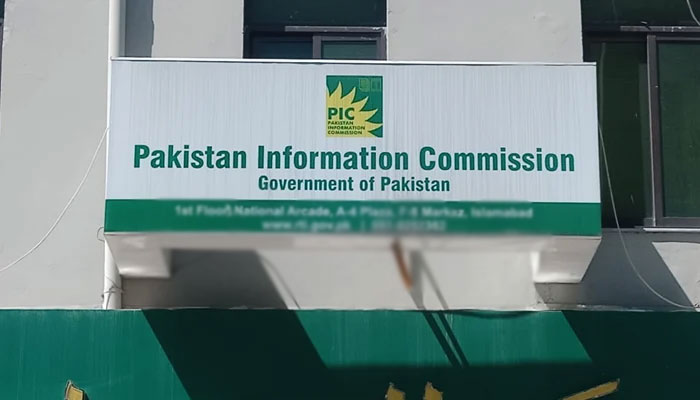
Among these, the RTI law enacted by Sindh stands out for its comprehensive approach to ensuring transparency across the board. Information commissions have been set up across Pakistan, with the exception of Balochistan, though the caretaker Balochistan cabinet approved the formation of an information commission in October 2023, to enforce transparency laws, along with a federal information commission in Islamabad for federal matters. However, these commissions have struggled to effectively enforce transparency laws, contributing to ongoing issues with corruption, lack of accountability, and inefficiency in governance.
This ineffectiveness highlights a significant disconnect between the intent of legislative measures for transparency and their actual application, emphasizing the need for substantial reforms to ensure genuine empowerment of citizens and accountability in governance systems. Moreover, the judiciary, including judges of superior courts, has been slow to grasp the significance of RTI laws, with a notable shift only after a Supreme Court judgment in 2023 that brought heightened awareness but not a comprehensive understanding of these laws’ potential.
Despite this, the Supreme Court has recognized the applicability of the RTI act to federal courts and the constitutional obligation to provide information under Article 19A, pointing towards a gradual recognition of the importance of transparency laws, while indicating the extensive journey ahead in embedding these principles across all levels of governance and the judicial system.
Despite the significant potential of RTI legislation in Pakistan for transforming governance through transparency and accountability, their true value remains largely unrecognized by the judiciary, government officials, and various sectors of society.
Most view these acts merely as means for retrieving information, missing their profound implications for proactive disclosure by public bodies and the broader governance landscape. These laws, foundational to democracy and backed by Article 19A of the constitution, mandate, that public entities proactively publish information, aiming to reduce the need for individual requests.
While progress has been made in implementing these acts, achieving a fully transparent and accountable governance framework requires further efforts. Enhancing law enforcement, increasing public awareness of these rights, and encouraging collective action among government, civil society, and citizens are essential steps toward realizing the full promise of the RTI laws in fostering an open, accountable, and informed Pakistani society.
It is valuable to examine Section 6 of ‘The Sindh Transparency and Right to Information Act, 2016’ to fully appreciate the profound potential these acts hold for enhancing good governance and empowering citizens.
The provisions enshrined in Sections 5 and/or 6 of both federal and provincial legislations. If these sections were to be fully enacted and embraced in their entirety, corruption could be significantly diminished, if not utterly eradicated. This implementation would empower the people, and establish a foundation of transparency and accountability, greatly enhancing the efficiency of government and affiliated offices.
It is imperative for the judiciary of Pakistan to take decisive steps towards enforcing these laws within the court systems. Such enforcement would compel the government, both directly and indirectly, to uphold these laws, thereby empowering the citizens. This critical move is essential for breaking free from the perpetual cycle of governance and economic crises that have beleaguered the nation.
The writer is an advocate of the high court and a former civil servant.







-
 Bridgerton’s Michelle Mao On Facing Backlash As Season Four Antagonist
 -
 King Charles Gets New ‘secret Weapon’ After Andrew Messes Up
 -
 Shia LaBeouf Makes Bold Claim About Homosexuals In First Interview After Mardi Gras Arrest
 -
 Princess Beatrice, Eugenie ‘strained’ As They Are ‘not Turning Back’ On Andrew
 -
 Benny Blanco Addresses ‘dirty Feet’ Backlash After Podcast Moment Sparks Online Frenzy
 -
 Sarah Ferguson Unusual Trait That Confused Royal Expert
 -
 Prince William, Kate Middleton Left Sarah Ferguson Feeling 'worthless'
 -
 Ben Affleck Focused On 'real Prize,' Stability After Jennifer Garner Speaks About Co Parenting Mechanics
 -
 Luke Grimes Reveals Hilarious Reason His Baby Can't Stop Laughing At Him
 -
 Why Kate Middleton, Prince William Opt For ‘show Stopping Style’
 -
 Here's Why Leonardo DiCaprio Will Not Attend This Year's 'Actors Award' Despite Major Nomination
 -
 Ethan Hawke Reflects On Hollywood Success As Fifth Oscar Nomination Arrives
 -
 Tom Cruise Feeling Down In The Dumps Post A Series Of Failed Romances: Report
 -
 'The Pitt' Producer Reveals Why He Was Nervous For The New Ep Of Season Two
 -
 Maggie Gyllenhaal Gets Honest About Being Jealous Of Jake Gyllenhaal
 -
 'Bridgerton' Star Luke Thompson Gets Honest About Season Five