
‘Understanding and collaborative efforts must for stable Pak-Afghan relations’
Islamabad: Pakistan-Afghanistan Religious Scholars Conference has developed a consensus on the need for sustained efforts to address humanitarian crises, promote dialogue, and build trust between two sides.
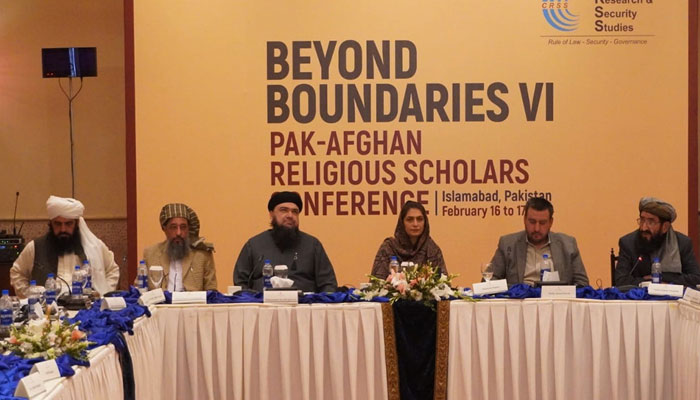
The conference was organised here by Centre for Research and Security Studies (CRSS) in collaboration with its Afghan partner Organisation for Economic Studies and Peace (OESP), as part of their initiative Beyond Boundaries. Dr Qibla Ayaz, Chairperson, Council of Islamic Ideology (CII), emphasised the importance of religious diplomacy and the role of scholars in addressing bilateral issues between Pakistan and Afghanistan. Based on his experiences of participation in various delegations and dialogues aimed at promoting girls' education, both domestically and in Afghanistan, he stressed the need to engage with key stakeholders, including religious leaders who possess the influence and understanding to contribute meaningfully to resolving bilateral issues.
Maulana Muhammad Tayyab Qureshi, Khyber-Pakhtunkhwa Chief Khateeb, noted that the way forward for the relationship between Pakistan and Afghanistan lies in both sides proactively addressing mutual concerns and taking conscious efforts to promote cordial ties between them at different levels of the relationship, including people-to-people contacts, economy and politics.
He stressed the importance of addressing the insecurity and humanitarian crises plaguing the region, particularly the desire among the young members of the population to leave due to economic hardships. Additionally, he advocated for empowering women and promoting education, citing examples of Muslim-majority countries where progress was achieved through a balance of religious and formal education.
Abdul Hakim Mujahid, former Afghan Diplomat, shed light on Afghanistan's dire humanitarian situation, calling for the lifting of sanctions to tackle the crisis and economic challenges effectively. He suggested integrating the Afghan Taliban into the global fabric to effectively combat terrorism and ensure stability. Maulana Hamid-ul-Haq Haqqani, Vice Chancellor, Dar-ul-Uloom Haqqani, Akora Khattak, advocated inclusive policies that promote education and empower women, recognising crucial role of education in fostering socioeconomic stability and peace.
Mufti Jamaluddin, former JUI MNA emphasised that the cultural and religious similarities between Pakistan and Afghanistan can bind the two nations into a relationship characterised by cooperation, trust, and understanding.







-
 Wiz Khalifa Reveals Unconventional Birthday Punch Tradition With Teenage Son In New Video
 -
 BAFTAs 2026: Kerry Washington Makes Debut In Custom Prada Gown
 -
 Jennifer Lopez Gets Emotional As Twins Max And Emme Turn 18
 -
 Andrew Mountbatten Windsor Blunders Are Result Of 'conspiracy Of Silence'
 -
 Keith Urban Fires Entire Management Team After Divorcing Nicole Kidman
 -
 Kylie Jenner Marks Death Anniversary Of Hairstylist Jesus Guerrero With '222' Tribute
 -
 Daniel Radcliffe On How It's Like Seeing New Harry Potter Cast Years Later
 -
 Andrew Portrait Makes Unexpected Debut At Louvre Museum Over Epstein Protest
 -
 Italy: Skeleton Of Saint Francis Of Assisi’s Goes On Public Display For First Time After 800 Years
 -
 Hailey Bieber's Subtle Gesture For Eric Dane’s Family Revealed
 -
 Moment Prince William 'broke Down' And 'apologised' To Kate Middleton
 -
 Paul Mescal And Gracie Abrams Stun Fans, Making Their Romance Public At 2026 BAFTA
 -
 EU Rejects Any Rise In US Tariffs After Court Ruling, Says ‘a Deal Is A Deal’
 -
King Charles Congratulates Team GB Over Winter Olympics Success
-
 Meryl Streep Comeback In 'Mamma Mia 3' On The Cards? Studio Head Shares Promising Update
 -
 Woman Allegedly Used ChatGPT To Plan Murders Of Two Men, Police Say