
Rigging petitions drop 340pc
Pakistan’s recent general elections, held on February 8, 2024, saw 87 complaints filed with the Election Commission of Pakistan
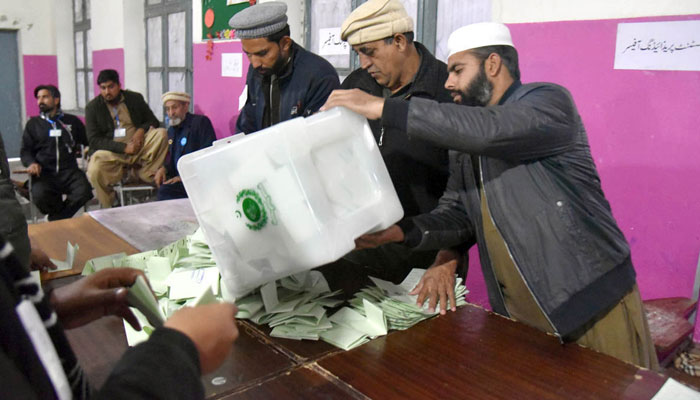
ISLAMABAD: In 2013, general elections were held on Saturday, May 11, to elect the members of the 14th National Assembly and the four Provincial Assemblies. Following the elections, a total of 411 petitions were filed with the Election Tribunals. Five years later, on July 25, 2018, Pakistan held general elections to elect the members of the 15th National Assembly and the four Provincial Assemblies. Again, a significant number of petitions, totaling 299, were filed after the results were announced.
Pakistan’s recent general elections, held on February 8, 2024, saw 87 complaints filed with the Election Commission of Pakistan (ECP). This number represents a significant decrease compared to the 299 petitions filed after the 2018 elections, reflecting a 70% drop. If petitions are any indication, the number of rigging allegations was 340% higher in 2018 compared to 2024.
Mr. Najam Ali has analyzed the geographical distribution of the 87 complaints filed with the ECP following the 2024 general elections. Of these complaints, 22 pertain to National Assembly seats, with 10 originating from Khyber Pakhtunkhwa, 7 from Punjab, 3 from Sindh, and 2 from Balochistan. Notably, PTI has publicly claimed that 80 National Assembly seats were “stolen” from them. Question: If 80 National Assembly seats were “stolen” from PTI, then why is it that only 12 petitions have been filed from Punjab, Sindh, and Balochistan?
Interestingly, of the 65 petitions filed for the four provincial assemblies, 43% originate from Khyber Pakhtunkhwa, where PTI has secured an overwhelming majority. This raises the question: Why does Khyber Pakhtunkhwa have a disproportionate share of both National Assembly and provincial assembly complaints?
To be certain, there has been a dramatic drop in electoral complaints from 2018 to 2024 – a 70% plummet. Question: Does it mark a genuine leap in electoral integrity? To be sure, social media has amplified a particular perspective, shaping perceptions of widespread rigging. The reality diverges significantly. Instead of perpetuating inflammatory online narratives, responsible journalism requires examining all sides of the issue.







-
 Extreme Cold Warning Issued As Blizzard Hits Southern Ontario Including Toronto
 -
 Lana Del Rey Announces New Single Co-written With Husband Jeremy Dufrene
 -
 Ukraine-Russia Talks Heat Up As Zelenskyy Warns Of US Pressure Before Elections
 -
 Lil Nas X Spotted Buying Used Refrigerator After Backlash Over Nude Public Meltdown
 -
 Caleb McLaughlin Shares His Resume For This Major Role
 -
 King Charles Carries With ‘dignity’ As Andrew Lets Down
 -
 Brooklyn Beckham Covers Up More Tattoos Linked To His Family Amid Rift
 -
 Shamed Andrew Agreed To ‘go Quietly’ If King Protects Daughters
 -
 Candace Cameron Bure Says She’s Supporting Lori Loughlin After Separation From Mossimo Giannulli
 -
 Princess Beatrice, Eugenie Are ‘not Innocent’ In Epstein Drama
 -
 Reese Witherspoon Goes 'boss' Mode On 'Legally Blonde' Prequel
 -
 Chris Hemsworth And Elsa Pataky Open Up About Raising Their Three Children In Australia
 -
 Record Set Straight On King Charles’ Reason For Financially Supporting Andrew And Not Harry
 -
 Michael Douglas Breaks Silence On Jack Nicholson's Constant Teasing
 -
 How Prince Edward Was ‘bullied’ By Brother Andrew Mountbatten Windsor
 -
 'Kryptonite' Singer Brad Arnold Loses Battle With Cancer