
One in five of world’s migratory species at risk of extinction: UN
It’s always about implementation, UN officials says ahead of convention’s meeting, held this week in Samarkand
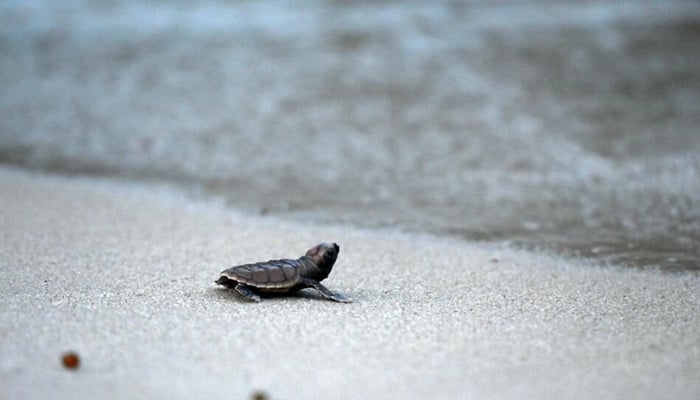
SINGAPORE: More than a fifth of the world’s migrating species are at risk of going extinct as a result of climate change and human encroachment, according to the United Nation’s first-ever report on migrating animals published on Monday.
Billions of animals make journeys across deserts, plains or oceans every year to breed and feed, and “unsustainable” pressures put on migratory species could not only see their populations dwindle, but also disrupt food supplies and threaten livelihoods, the report said.
Of the 1,189 species covered by a 1979 UN convention to protect migratory animals, 44 percent have seen numbers decline, and as many as 22 percent could vanish altogether, the report added.
The numbers were based on assessments and data provided by the International Union for the Conservation of Nature (IUCN) as well as the Living Planet Index, which collates population numbers for more than 5,000 species from 1970 onwards.The report, released on Monday, gives “a very clear direction” about what governments need to do to tackle the threats to migratory species, said Amy Fraenkel, executive secretary of the UN Convention on the Conservation of Migratory Species of Wild Animals.
“It’s always about implementation,” she said ahead of the convention’s meeting, held this week in Samarkand, Uzbekistan.
Humans pose the biggest threat, with activities including hunting, fishing and other forms of overexploitation impacting 70 percent of the species on the UN list.
Habitat loss affected up to 75 percent of the species – underlining the need for more connectivity between isolated ecosystems. The report’s authors urged governments to avoid disrupting habitats and migration paths when installing infrastructure such as dams, pipelines or wind turbines.
“We need to look at the top levels of government decision making,” said Fraenkel “and what is being planned so that we can make sure that we can ... address human needs while not sacrificing the nature we all need to survive.”
The pressures are being compounded by temperature changes, which disrupt the timing of migrations, cause heat stress and drive increasingly destructive weather-related events such as drought or forest fires.“The changes that had been already predicted some years ago are now happening,” Fraenkel said.




-
 Camila Mendes Reveals How She Prepared For Her Role In 'Idiotka'
 -
 China Confirms Visa-free Travel For UK, Canada Nationals
 -
 Inside Sarah Ferguson, Andrew Windsor's Emotional Collapse After Epstein Fallout
 -
 Bad Bunny's Star Power Explodes Tourism Searches For His Hometown
 -
 Jennifer Aniston Gives Peek Into Love Life With Cryptic Snap Of Jim Curtis
 -
 Prince Harry Turns Diana Into Content: ‘It Would Have Appalled Her To Be Repackaged For Profit’
 -
 Prince William's Love For His Three Children Revealed During Family Crisis
 -
 Murder Suspect Kills Himself After Woman Found Dead In Missouri
 -
 Sarah Ferguson's Plea To Jeffrey Epstein Exposed In New Files
 -
 Prince William Prepares For War Against Prince Harry: Nothing Is Off The Table Not Legal Ways Or His Influence
 -
 'How To Get Away With Murder' Star Karla Souza Is Still Friends With THIS Costar
 -
 Pal Reveals Prince William’s ‘disorienting’ Turmoil Over Kate’s Cancer: ‘You Saw In His Eyes & The Way He Held Himself’
 -
 Poll Reveals Majority Of Americans' Views On Bad Bunny
 -
 Wiz Khalifa Thanks Aimee Aguilar For 'supporting Though Worst' After Dad's Death
 -
 Man Convicted After DNA Links Him To 20-year-old Rape Case
 -
 Royal Expert Shares Update In Kate Middleton's Relationship With Princess Eugenie, Beatrice