
Industrial output grows modestly in November, still trails last year
PBS said the large-scale manufacturing sector increased 3.63% month-on-month in November
ISLAMABAD: The industrial output rose 1.59 percent year-on-year in November 2023, as some sectors recovered on local and foreign demand but the overall performance remained below the level of the previous fiscal year on high energy costs, official data showed on Monday.
The Pakistan Bureau of Statistics (PBS) said the large-scale manufacturing (LSM) sector, which accounts for about a quarter of the country’s gross domestic product (GDP), increased 3.63% month-on-month in November, driven by improvements in food and beverages, garments, pharmaceuticals, coke and petroleum products, chemicals, and a modest expansion in textile output.
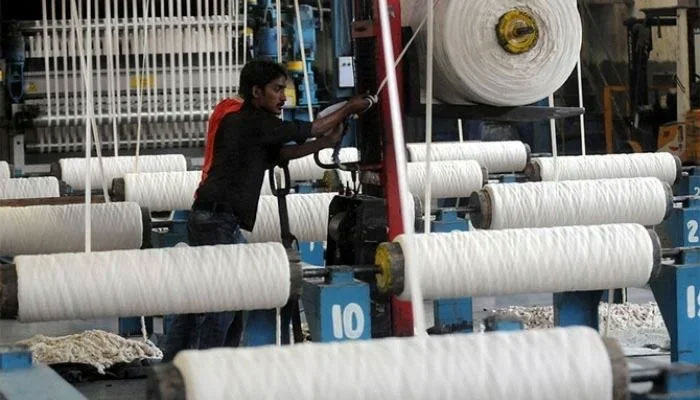
The output of automobiles, electrical equipment, iron and steel products, cotton cloth, and cement contracted in the month compared to a year ago. During the period of July-November 2023-24, the LSM output contracted by 0.8 percent over the corresponding period of the last fiscal year. It is noteworthy that in October, the LSM output contracted by 4.08 percent year-on-year, while in August and September, it experienced positive growth.
The PBS, which computes the quantum index numbers of LSM based on the latest production data from various sources including the Oil Companies Advisory Committee (OCAC), the Ministry of Industries and Production, and the provincial Bureau of Statistics, released this data.
From July 2022 to July 2023, LSM continuously contracted, displaying negative growth across various sectors. Although there was a brief reversal of the trend in August 2023, with 2.5 percent growth, and in September, with a 1.01 percent increase, October witnessed a 4.08 percent downturn.
Data analysis for November 2023 revealed that out of 25 sectors, only 13 displayed positive growth, leaving the rest in negative territory. Similar trends were observed in the cumulative growth for the first five months (July-Nov 2023/24) across these sectors.
Economic experts attribute the challenges faced by the country's industrial sector to one of the major factors: costly bank financings. Currently, the state bank’s policy rate is 22 percent, while the commercial banks’ lending rate is much higher, leading fund holders to keep their savings in banks rather than investing in productive sectors to generate economic activities.
Coupled with expensive bank financing, high energy rates have rendered the cost of doing business non-feasible, resulting in reduced operational hours and plant closures in recent months.
In November 2023, key sectors reported declining output compared to the same month of the previous year. Notable declines included automobile output contracting by 66 percent, cement at 10.7 percent, tobacco by 34.8 percent, furniture at 68 percent, other transport equipment at 21.9 percent, computer, electronics, and optical products by 15.2 percent, electrical equipment at 7.8 percent, paper and board 5.3 percent, fabricated metal 4.16 percent, cotton cloth 3.9 percent, cotton yarn 2.5 percent, and iron and steel products output also shrinking by 0.63 percent over the corresponding month of the last year.
On the positive side, a dozen sectors experienced growth, with food increasing by 1.87 percent, beverages by 19.1 percent, garments by 27.8 percent, leather products by 2.6 percent, wood products by 5.3 percent, coke and petroleum products by 6.5 percent, and chemicals by 4.0 percent, including an 11.24 percent rise in fertilizers.
Similarly, pharmaceuticals output increased by 34.4 percent, rubber products by 0.8 percent, non-metallic minerals by 2.0 percent, machinery and equipment by 99.5 percent, footballs by 7.5 percent, and textiles by 0.4 percent during November 2023 compared to corresponding month of the previous year.
It is important to note that the LSM accounts for about a quarter of the country’s gross domestic product contracted by 10.26 percent in the last fiscal year 2022-23. Major industries reported substantial declines. In contrast, fiscal year 2021-22 witnessed a robust growth rate of 11.7 percent, fueled by affordable funding and favorable policies fostering production and GDP expansion.







-
 Margot Robbie Delivers Sweet Message Ahead Of Valentine's Day
 -
 How AI Boyfriends Are Winning Hearts In China: Details Might Surprise You
 -
 Blake Lively Mocked Over 'dragons' After Latest Court Appearance
 -
 Gmail For Android Now Lets Users Create Labels On Mobile
 -
 Emma Slater Reveals Final Moments With James Van Der Beek Before His Death
 -
 Princess Kate Makes Surprise Visit To Support Mental Health Initiative
 -
 Reese Witherspoon Sparks Nostalgia With 'Green Sisters' Tribute To Jennifer Aniston
 -
 Royal Family Faces Fresh Crisis While Andrew's Controversy Refuses To Die
 -
 Travis Kelce’s Mom Talks About Taylor Swift’s Wedding Dance Song And Whether She’s Signed An NDA
 -
 James Van Der Beek's Final Days 'hard To Watch' For Loved Ones
 -
 Lewis Hamilton Ditched Question About Kim Kardashian?
 -
 Will Smith, Jada Pinkett's Marriage Crumbling Under Harassment Lawsuit: Deets
 -
 'Fake' Sexual Assault Report Lands Kentucky Teen In Court
 -
 'Vikings' Star Shares James Van Der Beek's Birthday Video After His Death
 -
 Jennifer Aniston Receives Public Love Note From Jim Curtis On 57th Birthday
 -
 Microsoft AI Chief Says AI Will Replace Most White-collar Jobs Within 18 Months