
Low turnout as Tunisians vote for new chamber
TUNIS: Tunisians on Sunday largely shunned polling stations in the first elections for a new chamber of parliament under a constitution pushed through last year by President Kais Saied.
Opponents of Saied argue the election is the latest step in the president´s “authoritarian” agenda. Saied, a former law professor who was elected president in 2019, seized executive powers two years later, sacking the government, dissolving parliament and declaring he would rule by decree.
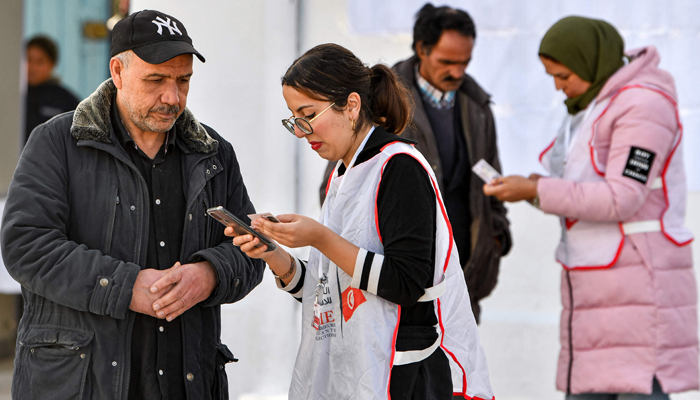
Just 11.66 percent of the nine million strong electorate turned out on Sunday for the vote to choose more than 2,000 councillors from around 7,000 candidates, according to the Independent High Authority for Elections.
Opponents of Saied had called for a boycott of the election, which they said was “illegal” and had been “imposed”. A feeble turnout had been widely expected, with polling stations appearing largely empty during the day.
“I have never seen such a low turnout during elections held in Tunisia since 2011,” said an official in charge of one polling station in downtown Tunis, who asked not to be named. The official was referring to the year in which a revolution overthrew president Zine El Abidine Ben Ali after 24 years in power.
The protests that deposed Ben Ali helped to spark demonstrations and uprisings across the Middle East, a phenomenon later dubbed the Arab Spring. “I understand the people who are ignoring these elections,” Salah Habib, a 60-year-old who said he cast his ballot simply “to mark (his) presence”, told AFP.
Nadia Majer, a 23-year-old student who opted not to vote, said upon leaving a nearby gym: “I didn´t understand anything about this election, and I don´t want to understand anything.” More than 260 prominent Tunisian figures had signed a petition against what they called a “useless” election, saying Saied´s government “continues to implement its political project imposed on” people in the country.
They alleged the aim of the election was to “weaken local power, disperse it, and make it another docile instrument in the hands of the executive power”. Since February, authorities have jailed more than 20 members of the opposition, including the Ennahdha party leader Rached Ghannouchi and Jawhar Ben Mbarek, the co-founder of the National Salvation Front, among others. The vote will result in the establishment of local, regional and district councils, allowing for the creation of the second chamber of parliament.






-
 Mexico’s President Considers Legal Action Over Elon Musk Cartel Remark
 -
 Prince William Hits The Roof With The Andrew Saga Bleeding Into Earthshot
 -
 HBO Gives Major Update About 'Industry' Season Five And Show's End
 -
 Donnie Wahlberg Responds To 'Boston Blue' Backlash: 'Nobody Was More Disappointed Than Me'
 -
 Jennifer Garner Gets Emotional Over Humble Career Start: 'It Makes Me Want To Cry'
 -
 Princess Beatrice Told An Acquaintance That She ‘likes’ Jeffrey Epstein: Grim Verdict Drops
 -
 Late Katherine Short's Neighbours Give Insights Into Her 'peace Loving' Personality Post Suicide
 -
 Fresh Details Of King Charles, Queen Camilla's US Visit Emerge Amid Andrew Investigation
 -
 Iran 'set To Buy' Chinese Carrier-killer Missiles As US Forces Gather In Region
 -
 Prince Harry And Meghan Unlikely To Meet Royals In Jordan
 -
 Hero Fiennes Tiffin Shares Life-changing Advice He Received From Henry Cavill
 -
 Savannah Guthrie's Fans Receive Disappointing News
 -
 Prince William Steps Out For First Solo Outing After Andrew's Arrest
 -
 Jake Paul Chooses Silence As Van Damme Once Again Challenges Him To Fight
 -
 Google Disrupts Chinese-linked Hacking Groups Behind Global Cyber Attacks
 -
 Four People Killed In Stabbing Rampage At Washington Home