
Govt has no accurate data of child marriages, concedes law minister
Sindh Caretaker Law Minister Barrister Muhammad Omer Soomro has conceded that underage marriages continue to take place in the province despite the enactment of a law in 2014 that prohibits unlawful social practice of marrying off children before they attain the stage of adulthood.
He said this on Thursday while speaking at a consultation session organised by the Sindh Human Rights Commission (SHRC) in collaboration with the Legal Aid Society (LAS) on the implementation of the Sindh Child Marriages Restraint Act 2013 (the law was drafted in 2013 but passed by the Sindh Assembly in April 2014).
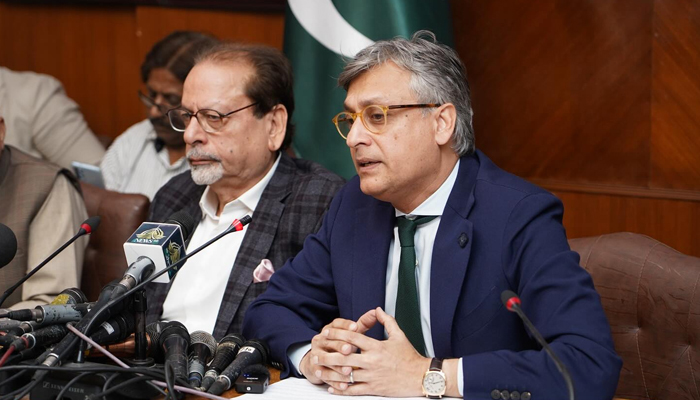
Representatives of different government departments and agencies responsible for the implementation of the law attended the session.
Barrister Soomro said the Sindh Assembly had passed several praiseworthy laws but there was an issue regarding their implementation in the province.
He lamented that the commissioners and assistant commissioners had failed to implement the Sindh Child Marriages Restraint Act 2013.
He said poverty was not the sole cause behind the unlawful matrimonial practice as there were also religious motivations involved in that.
The law minister told the audience that Islam had emerged as the first religion that provided a lawful basis for solemnising marriages in a society. He said all the concerned stakeholders had to work hard to tackle the issue of child marriage.
He lamented that the government did not have any accurate data about the instances of child marriage, which, according to him, continued to take place due to many unjust customs observed in a traditional feudal society.
He stressed the need for running a public awareness campaign on the issue by involving schools, colleges and religious seminaries. He termed religious extremism as one of the obstacles in the implementation of law prohibiting child marriages.
Barrister Soomro was of the view that the Council of Islamic Ideology had to
be involved in the campaign to implement the law. He said the Federal Shariat Court had also sanctioned this law.
He said the local government agencies had to be involved in implementing the population control policy. He also called for training Nikah registrars in the province.
Barrister Soomro praised the last Sindh government for passing many good laws. He suggested that the human rights-related establishments in the province should hire psychologists to provide essential counselling on such social practices and customs.







-
 Prince Harry And Meghan Unlikely To Meet Royals In Jordan
 -
 Hero Fiennes Tiffin Shares Life-changing Advice He Received From Henry Cavill
 -
 Savannah Guthrie's Fans Receive Disappointing News
 -
 Prince William Steps Out For First Solo Outing After Andrew's Arrest
 -
 Jake Paul Chooses Silence As Van Damme Once Again Challenges Him To Fight
 -
 Google Disrupts Chinese-linked Hacking Groups Behind Global Cyber Attacks
 -
 Four People Killed In Stabbing Rampage At Washington Home
 -
 Meghan Pushes Prince Harry Into Territory That’s Dangerous To His Brand: ‘She Isn’t Hearing A Word Of It’
 -
 Christina Applegate Reflects On Lasting Impact Of Being Molested In Childhood
 -
 Martin Short Makes Big Decision Following Tragic Death Of Daughter
 -
 Antarctica’s Mysterious ‘gravity Hole’: What’s Behind The Evolution Of Earth’s Deep Interior?
 -
 Hilary Duff Addresses Ashley Tisdale's 'toxic Mom Group' Claims And Matthew Koma's Firey Response
 -
 Jack Hughes's Proximity To Trump Angers Tate McRae Fans
 -
 Neve Campbell Opens Up About Her 'difficult Decision' To Not Sign 'Scream 6'
 -
 Nobel-winning Scientist Resigns From Columbia University After Epstein Links Revealed
 -
 Prince William Remarks At BAFTAs 'indicative' Of King Charles Physical, Mental Health Too