
Federal govt, cantonment boards cannot levy, collect taxes on immovable properties: SHC
The federation and all cantonment boards lack competence, power and jurisdiction to levy, charge and recover any tax on any immovable property, including, but not limited to, the tax on the annual rental value of immovable property, declared the Sindh High Court (SHC) on Thursday.
The SHC order came on dozens of petitions challenging issuance of property tax and conservancy charges by the cantonment boards.
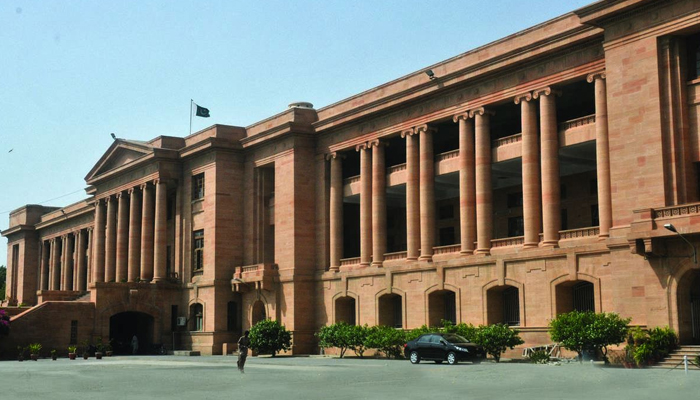
The petitioners’ counsel contended that after the 18th Amendment, the federal government or cantonment boards could not charge or collect the property tax in respect of the properties situated in the province of Sindh. The counsel submitted that the impugned challans/demand notices were illegal and without lawful authority, as the annual rental value of the properties had been enhanced in violation of the law as that was done without calling objections.
A division bench of the high court headed by Justice Mohammad Shafi Siddiqui after hearing the arguments of the cantonment boards and the petitioners’ counsel, for reason to be recorded later, held that the 18th Amendment had brought a change to the Entry 50 in the Fourth Schedule (Federal Legislative List) of the Constitution of the Islamic Republic of Pakistan.
The high court observed that as a consequences of the 18th Amendment, the federation and all cantonment boards lacked competence, power and jurisdiction to levy, charge, impose and recover any or all taxes on any immovable property, including, but not limited to, tax on the annual rental value of immovable property.
The SHC held that the 18th amendment, consequently, restored the competence and jurisdiction of the province to levy, charge, recover, and legislate on the subject identified above and to pursue it accordingly.
The bench ordered that the amounts so recovered by the cantonment boards under the subject of tax since the 18th amendment also called for an account.
The counsel for the cantonment boards requested that since a short order had been passed in the petitions and the competence, power and jurisdiction of the cantonment boards could not be enforced for the aforesaid subject, therefore, in terms of clause iii of the short order, the petitioners may not move applications in the next four weeks either for the adjustment or refund of the amount paid towards the aforesaid subject i.e. tax on the annual rental value of the property, as the respondents intended to approach the Supreme Court.
The SHC granted the request and ordered that the petitioners may not move applications in next four weeks either for adjustment or refund of the amount paid toward the tax on annual rental value of the property.







-
 Kanye West's Last Measure To Save Bianca Censori Marriage As He Tries To Salvage Image
 -
 Kim Kardashian Finally Takes 'clear Stand' On Meghan Markle, Prince Harry
 -
 Christina Applegate Makes Rare Confession About What Inspires Her To Keep Going In Life
 -
 Patrick J. Adams Shares The Moment That Changed His Life
 -
 Selena Gomez Getting Divorce From Benny Blanco Over His Unhygienic Antics?
 -
 Meet Arvid Lindblad: Here’s Everything To Know About Youngest F1 Driver And New Face Of British Racing
 -
 At Least 30 Dead After Heavy Rains Hit Southeastern Brazil, 39 Missing
 -
 Courtney Love Recalls How ‘comparison’ Left Marianne Faithfull ‘broken’
 -
 Pedro Pascal Confirms Dating Rumors With Luke Evans' Former Boyfriend Rafael Olarra?
 -
 Ghost's Tobias Forge Makes Big Announcement After Concluding 'Skeletour World' Tour
 -
 Katherine Short Became Vocal ‘mental Illness’ Advocate Years Before Death
 -
 SK Hynix Unveils $15 Billion Semiconductor Facility Investment Plan In South Korea
 -
 Buckingham Palace Shares Major Update After Meghan Markle, Harry Arrived In Jordan
 -
 Demi Lovato Claims Fans Make Mental Health Struggle Easier
 -
 King Hospitalized In Spain, Royal Family Confirms
 -
 Japan Launches AI Robot Monk To Offer Spiritual Guidance