
Al-Azizia verdict
Pakistan is less than two months away from the general elections – and the country is now in election mode. Crucial court decisions a few months before the election exercise are a distinct feature of Pakistani politics, and things are no different this time.
The PML-N has cleared at least one legal hurdle in the way of party leader Nawaz Sharif’s political ambitions. The Islamabad High Court (IHC) on Tuesday acquitted him in the Al-Azizia reference case, two weeks after he was acquitted in the Avenfield Apartments case.
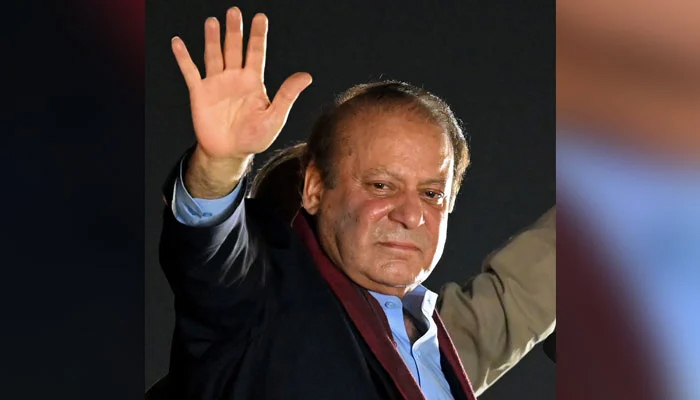
An accountability court had in December 2018 sentenced the former prime minister to seven years in jail and imposed a fine of GBP2.5 million in the Al-Azizia case. At that time too, legal experts had said that both these cases were without merit, and since there was no credible evidence against Nawaz, his convictions were legally up for debate. For most political observers, things seem to be finally falling in place for the former prime minister. The Al-Azizia verdict is a major relief for Nawaz and his political party. Now the remaining hurdle is his lifetime disqualification as a parliamentarian, which legal experts believe may also be overturned because it was extremely weak.
Nawaz’s lifetime disqualification had been seen as a dangerous precedent for politicians. Many had pointed out at that time that this was akin to trampling upon his or any other politician’s fundamental right to contest elections without any recourse. In this context, it is understandable why Tuesday’s acquittal would be seen as judicial injustice being overturned. Nawaz Sharif has once again reiterated his call for accountability of those responsible for ousting him from premiership in 2017. And while he maintains that he has no interest in seeking revenge, he has highlighted the need for those responsible for his ouster to be held accountable. Political observers have also pointed out that while judicial wrongs are being righted, what no one can undo is the damage these verdicts and decisions have done to the country as a whole. Some would go so far as to say politics, economy and society have seen a downward slide because of these decisions from 2016-17 and the long-lasting impact they have had on almost everything.
Political uncertainty has led to economic instability, increased political polarization in society, unprecedented attacks on people’s freedom of expression, and a gradual takeover of a hybrid political system. Project Imran can be seen as one way of dislodging the smooth power transition of democratic governments post the Charter of Democracy. To disrupt this smooth transition that would have eventually led to the end of a skewed power imbalance, frivolous cases were made against Nawaz to keep him out of politics and to bring in Imran at the helm of affairs. That said, with Imran in jail and Nawaz’s convictions now being overturned, it seems that the hybrid system still continues to thrive. Nawaz’s demand that those who were responsible for his ouster must be held accountable is valid. Democratic norms dictate that any cases pursued against political figures are not just veiled witch-hunts, that the electoral process is above board, and that the people’s mandate is respected.







-
 Why Kate Middleton, Prince William Opt For ‘show Stopping Style’
 -
 Here's Why Leonardo DiCaprio Will Not Attend This Year's 'Actors Award' Despite Major Nomination
 -
 Ethan Hawke Reflects On Hollywood Success As Fifth Oscar Nomination Arrives
 -
 Tom Cruise Feeling Down In The Dumps Post A Series Of Failed Romances: Report
 -
 'The Pitt' Producer Reveals Why He Was Nervous For The New Ep Of Season Two
 -
 Maggie Gyllenhaal Gets Honest About Being Jealous Of Jake Gyllenhaal
 -
 'Bridgerton' Star Luke Thompson Gets Honest About Season Five
 -
 Prince William On Verge Of Breakdown Because Of 'disgraced' Andrew
 -
 Tig Notaro Reflects On Oscar Nod For 'Come See Me In The Good Light': 'I Was Sleeping'
 -
 Kenyon Sadiq Sets 40-yard Dash Record At NFL Scouting Combine, Eyes First Round
 -
 Talk Show Host Drops Hint About Taylor Swift, Travis Kelce Wedding Date
 -
 Andrew Scandal Brings New Worries For Prince Harry, Meghan Markle
 -
 King Charles Imposes New Restrictions On Ex-Prince Andrew In Surprise Move
 -
 Chris Hemsworth Reveals How Elsa Pataky Guides His Career Moves
 -
 Was Travis Barker In A Relationship With Kim Kardashian Before Marrying Her Sister?
 -
 Brad Pitt Feeling Down In The Dumps After Kids' Snubs As Pals Continue To Paint Angelina Jolie A Villain