
Rupee’s recovery reduces external debt by 2.3pc in October
KARACHI: The federal government debt edged up 0.3 percent to Rs62.5 trillion in October, as a stronger rupee reduced the burden of external borrowings, central bank data showed on Tuesday.
The government's foreign debt fell 2.3 percent to Rs22 trillion in October from a month earlier, reflecting the appreciation of the local currency against the US dollar, the State Bank of Pakistan (SBP) data showed. In the latter part of August of this year, the rupee witnessed a steep decline in value relative to the dollar, hitting a record low of 305 to the dollar.
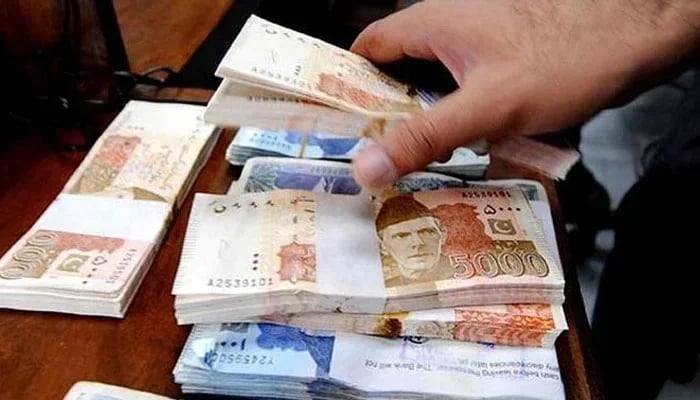
But recent actions by the government and central bank—backed by the army—to stop currency smuggling and hoarding resulted in a rapid recovery of the rupee to 281.52 in October, which helped lower the stock of external debt for that month.
The slight decrease in the country’s external debt comes as the country expects to receive the next loan tranche of around $700 million from the International Monetary Fund’s $3 billion loan programme. If the global lender's executive board gives its approval, the payout might be released this month. In October, the domestic debt rose to Rs40.4 trillion, an increase of 2 percent from the previous month.
Growing spending, rising interest rates, and a lack of foreign funding are the main reasons why the government keeps taking out large bank loans. Banks made substantial investments in government securities because the government needed money, and they are currently seeing big returns on these investments.
When comparing October's public debt figures to those from the same month last year, the picture wasn't very promising. The debt rose by 24.5 percent year-on-year in October. By October 31, 2022, the central government’s debt had grown to Rs50.2 trillion. In the first four months (July-October) of the current fiscal year, the amount of debt held by the government rose by 2.69 percent. By the end of June, these public borrowings reached Rs60.840 trillion.
Pakistan's public debt has reached an unsustainable level, according to acting Finance Minister Dr Shamshad Akhtar. The rising cost of debt has also driven Pakistan out of the international credit markets. She went on to say that the restructuring of foreign debt, which is primarily owed to private lenders or preferential creditors, was also complicated.
The nation is vulnerable to financial vulnerabilities as a result of the expanding debt stock, which has substantial fiscal implications. This is according to a World Bank report. The research also underlined how ongoing debt repayments and budget deficits have led to yearly gross finance needs that have been persistently large, averaging 27 percent of GDP over the last ten years. This is far more than the 15 percent criteria for emerging markets.







-
 Catherine O’Hara’s Cause Of Death Finally Revealed
 -
 Swimmers Gather At Argentina’s Mar Chiquita For World Record Attempt
 -
 Brooklyn Beckham, Nicola New Move Could Leave David, Victoria Reeling
 -
 Anthropic Criticises ChatGPT Ads As OpenAI Begins Testing Advertising In AI Chats
 -
 YouTube Star MrBeast Acquires Step: Redefining Finance For Gen Zs
 -
 Sarah Ferguson Plans Big Move To Cause ‘serious Damage’ To Andrew
 -
 Trump Nears 500 Press Interactions In His Second Term, Surpassing Former President Biden
 -
 Hailee Steinfeld Reveals Her Plans To Return To Music
 -
 Elon Musk Unveils SpaceX Plan For Civilian Moon, Mars Trips
 -
 MTG Commander Banned Update: Wizards Frees Infamous Instant-win Card
 -
 Royal Family Braces For ‘final Blow’ As Andrew Scandal Deepens
 -
 Snow Forecast Warns Of Reduced Visibility And Travel Risks In Ontario
 -
 Margot Robbie Reveals 'worst' Gift She Received From Co-star
 -
 Casey Wasserman Says He ‘deeply Regrets’ Ghislaine Maxwell Emails After DOJ File Release
 -
 Discord Face Scan Age Verification Rules Explained As Platform Tightens Access
 -
 Cavaliers Vs Nuggets Showdown Heats Up After Blockbuster Trade