
Becoming water secure
Talk at the 6th Karachi International Water Conference should be seen as an eye-opener for a country which has not taken any meaningful step to tackle its water problem. A report published by the UN a few weeks ago highlighted that at least 45 million children in the South Asian region lack access to basic drinking water services. Other reports, published over the last five years, have pointed out that Pakistan may face a severe drinking water crisis by 2030.
All such estimates should wake up our governments and leaders who rarely talk about these issues during their political gatherings. Pakistan is all set to hold elections in February, and such matters require the urgent attention of leaders who are preparing to accept the enormous responsibility of governing the country.
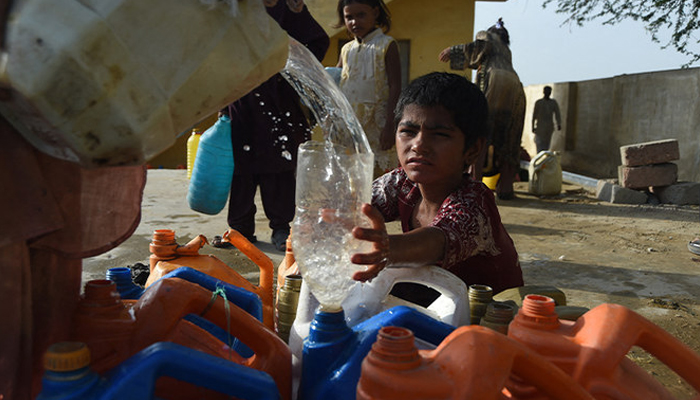
Experts have done their share of work: raising alarm bells and warning the country that it can lose access to a vital utility if people are not careful with their spending habits. During the recently concluded conference, experts also stressed the importance of “thinking ourselves as part of nature” – a slightly different perspective since we are taught to behave as “custodians of nature”. The scarcity of water can only be fixed if we start taking care of the other elements (lakes, forests, birds, etc) present near our seas, oceans and waterways. It is true that technological advancements over the years have created deep divides between people and nature. The idea of protecting nature has been dismissed by the urge to make profits and climb up the ladder of growth. The semiconductor industry, which is at the forefront of a green environment, is itself guilty of contributing towards global greenhouse gas emissions. Over reliance on plastic and low scale recycling has led to a situation where around 11 million metric tons of plastic are dumped in the ocean. Keeping a check on our activities is key towards sustainability.
Only a healthy planet can give our children the healthy future they desperately need. The government has to make climate-based sustainable living a priority. Water is a basic necessity of life, and its scarcity can lead to an unmanageable humanitarian crisis. Pakistan also has to understand that in its fight against water insecurity, it stands alone. Rich countries around the world have shown repeatedly that they are not interested in fixing climate-vulnerable countries. Pakistan does not have a lack of resources, and it can reverse some of the effects of climate change. All it needs is a firm commitment to act towards saving its homeland. The way forward is to look for sustainable solutions to protect nature against the threats of global warming.







-
 Caleb McLaughlin Shares His Resume For This Major Role
 -
 King Charles Carries With ‘dignity’ As Andrew Lets Down
 -
 Brooklyn Beckham Covers Up More Tattoos Linked To His Family Amid Rift
 -
 Shamed Andrew Agreed To ‘go Quietly’ If King Protects Daughters
 -
 Candace Cameron Bure Says She’s Supporting Lori Loughlin After Separation From Mossimo Giannulli
 -
 Princess Beatrice, Eugenie Are ‘not Innocent’ In Epstein Drama
 -
 Reese Witherspoon Goes 'boss' Mode On 'Legally Blonde' Prequel
 -
 Chris Hemsworth And Elsa Pataky Open Up About Raising Their Three Children In Australia
 -
 Record Set Straight On King Charles’ Reason For Financially Supporting Andrew And Not Harry
 -
 Michael Douglas Breaks Silence On Jack Nicholson's Constant Teasing
 -
 How Prince Edward Was ‘bullied’ By Brother Andrew Mountbatten Windsor
 -
 'Kryptonite' Singer Brad Arnold Loses Battle With Cancer
 -
 Gabourey Sidibe Gets Candid About Balancing Motherhood And Career
 -
 Katherine Schwarzenegger Shares Sweet Detail From Early Romance Days With Chris Pratt
 -
 Jennifer Hudson Gets Candid About Kelly Clarkson Calling It Day From Her Show
 -
 Princess Diana, Sarah Ferguson Intense Rivalry Laid Bare