
Guarding the future
The 21st century will forever be remembered for facilitating the unprecedented rise and celebrated adoption of AI technologies. Countries around the world are setting up digital and smart cities, relying more on the internet and technology. AI-powered military installations are also cropping up in most countries. But these advancements have their fair share of problems, and with the rise of AI, serious security threats have also emerged.
For Pakistan, there is no room for leniency as it is a country where terrorism has marked its rebirth and any malware in the systems operating the security installations can lead to big losses. Security experts and government officials are aware of the risks AI-powered technologies pose and are engaging with the international community to highlight Pakistan-specific threats.
In a recent workshop on international security, hosted by the Center for International Strategic Studies (CISS) in collaboration with the United Nations Institute for Disarmament Research (UNIDIR), Pakistan’s Foreign Secretary Ambassador Syrus Sajjad Qazi highlighted the need for equitable access to AI technologies.
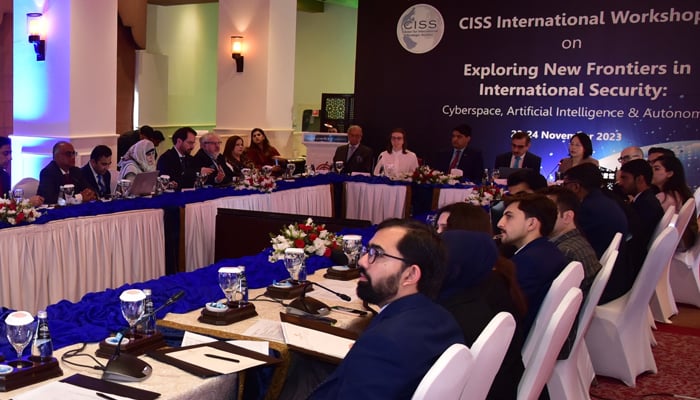
He also stressed the need for cooperating with the global community to address cyber threats and mitigate risks associated with the inevitable use of AI-powered systems.
One serious threat that such systems pose is the leak of sensitive data. Pakistan has had its fair share of mishaps where sensitive data of national identity card holders has been leaked and sold on the dark web. Some cybersecurity experts have also identified websites where people’s sensitive data can easily be retrieved with the help of someone’s phone number or other publicly available information. These threats are serious, and Pakistan cannot afford to let its systems be riddled by such loopholes. Digitizing means that the state will have to rely on machines for a lot of things. It is important to ensure that security systems are foolproof and meet Pakistan-specific requirements. And, while engaging with the international community is important (given how most development is imported from rich countries), Pakistan also has to make its internal controls strong to prevent any hacking into its systems.
It is rather unfortunate that Pakistan does not have a centralized discussion forum where people from all fields can come together and share their experiences. Discussions around AI are mostly based on the application of AI tools in spreading disinformation, especially during the election season. Although such fears are valid, we also have to restructure our infrastructure to digitize quickly and safely. And the latter is only possible when our policymakers across the board understand both visible and hidden threats these technologies come with. AI will soon enter all fields of life, and while we embrace this change, it is important to safeguard our infrastructure and protect against possible cyberattacks.







-
 50 Cent Super Bowl Ad Goes Viral
 -
 'The Housemaid' Lifts Company's Profits: Here's How
 -
 Michael Douglas Recalls Director's Harsh Words Over 'Wall Street' Performance
 -
 Henry Czerny On Steve Martin Created Humor On 'Pink Panther' Set
 -
 Lady Victoria Hervey: Andrew Mountbatten-Windsor's Ex-girlfriend Proud Of Being On Epstein Files
 -
 Dolly Parton Created One Of Her Iconic Tracks With Acrylic Nails?
 -
 Parents Alarmed As Teens Form Emotional Bonds With AI Companion Chatbots
 -
 Denzel Washington Surprises LeBron James
 -
 Cillian Murphy's Hit Romantic Drama Exits Prime Video: Here's Why
 -
 Paris Hilton Reveals What Keeps Her Going In Crazy Schedule
 -
 Deep Freeze Returning To Northeastern United States This Weekend: 'Dangerous Conditions'
 -
 Inside Dylan Efron's First 'awful' Date With Girlfriend Courtney King
 -
 'Sugar' Season 2: Colin Farrell Explains What Lies Ahead After THAT Plot Twist
 -
 ‘Revolting’ Sarah Ferguson Crosses One Line That’s Sealed Her Fate As Well As Andrew Mountbatten-Windsor’s
 -
 AI Rivalry Heats Up As Anthropic Targets OpenAI In Super Bowl Ad
 -
 Kate Middleton, Prince William Share Message Ahead Of Major Clash