
Prevalence of knee pain rose 65pc in 20 years, seminar told
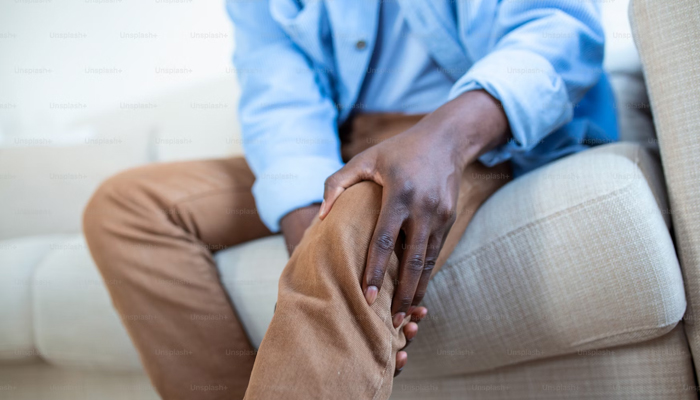
Knee pain affects approximately 25 percent of adults, and its prevalence has increased almost 65 percent over the past 20 years, accounting for nearly 4 million primary care visits annually, a public health awareness seminar was told.
In his address, Dr Ranjeet Kumar, a consultant orthopaedic surgeon & knee implant expert, said: “The knee joint is one of the largest in the body. In many cases, chronic knee pain begins when running or climbing stairs. Sometimes, symptoms appear only after heavy or prolonged exertion.”
He further said, “Some knee disorders are characterized by pain even at rest or in a sitting position. As a result, the knee joint takes on a tremendous burden and is most often injured. Over time, degenerative changes occur in it. Thus, knee pain is a sign of severe pathology.”
Dr Kumar said Knee pain from a prolonged sitting position may be a sign of damage to the cartilage under the patella (kneecap) which, the sooner it is detected, the more effectively it can be treated.
Dr Kumar told the seminar, held recently by Dr Essa Laboratory & Diagnostic Center, DHA, Zamzama, that currently, total knee replacement surgeries have become integral part to treat patients suffering from severe knee problems, and after having a knee replacement and recovering from it, the patient can resume regular activities.
According to Dr Ranjeet Kumar, the common assumption is that knee replacement surgery is not recommended for a patient younger than 50. Surgery recommendations, however, are based on a patient’s level of discomfort and functional limitations. Studies published in medical journals, such as The Journal of Bone and Joint Surgery, have reported that knee replacement surgery has a high success rate, with approximately 90-95% of patients experiencing significant pain relief and improved function. Regardless of the reasons for chronic knee pain, it is not worth delaying the visit to the doctor.
“Rheumatoid arthritis is an autoimmune condition that causes the tissue around the joint to become inflamed and thickened. Chronic inflammation often leads to damage and loss of cartilage, symptoms of rheumatoid arthritis are similar to other types of arthritis in the knee: Stiffness, knee pain, knee swelling & difficult bending the knee fully. Rheumatoid arthritis occurs in about 1% of global population and is 2 to 3 times more common in women” said eminent consultant rheumatologist & CMO of Engro Pakistan, Prof Ahmad Iqbal Mirza, while giving a rheumatologist’s perspective on knee pain.
Knee pain usually becomes worse as arthritis progresses. Many people with severe pain from arthritis choose to have surgery to relieve their symptoms and help repair the joint, but surgery isn’t right for everyone. Some of the more conservative options for treating knee pain from arthritis include medication and at-home strategies like physiotherapy and exercise.
According to the Centers for Disease Control and Prevention (CDC), over 595 million adults globally, have osteoarthritis, a major contributor to knee pain and disability.
Earlier, Dr Farhan Essa Abdullah, CEO of Dr Essa Laboratory & Diagnostic Center, said: Our knees are a marvel of engineering. They take quite a battering over the course of a lifetime, especially an active one; knees bear our full weight when we’re standing, with extra force when we run, jump, twist, go up and down stairs, kick a ball or cavort around a tennis court or down a ski slope. Little wonder knees are susceptible to short-term (acute) injuries and long-term (chronic) problems such as osteoarthritis. Most acute knee problems get better without specific treatment, and the best initial treatment for chronic knee pain is exercise and weight loss.” Advising preventive tips for chronic knee pain, he emphasized weight loss should be the primary pillar of treatment because the extra kilos increase the stress on joints, exacerbating pain and impacting movement. He said fitness plays a big role in arthritis. Usually, people stop walking due to knee pain but never stop walking irrespective of arthritis.
Once you develop knee arthritis, you should avoid ground level activities like sitting cross legged, squatting and avoid climbing stairs, he suggested.
“The most important thing is to avoid sitting for long hours. If it is inevitable, look for proper chairs. The height of the chair is extremely important i.e., the angle between your thigh and your leg should not exceed 90 degrees. Make it a point to get up frequently and stretch out your legs and make time for strengthening of the knee joints and the leg muscles.”







-
 AI Copyright Battle: ByteDance To Curb Seedance 2.0 Amid Disney Lawsuit Warning
 -
 Savannah Guthrie In Tears As She Makes Desperate Plea To Mom's Kidnappers
 -
 Canada’s Defence Industrial Strategy Targets 125,000 Jobs And Export Growth
 -
 Tre Johnson, Former NFL Guard And Teacher, Passes Away At 54
 -
 Jerome Tang Calls Out Team After Embarrassing Home Defeat
 -
 Cynthia Erivo Addresses Bizarre Rumour About Her Relationship With Ariana Grande
 -
 Prince Harry, Meghan Markle Spotted Cosying Up At NBA All-Star Game
 -
 Lady Gaga Explains How Fibromyalgia Lets Her 'connect With People Who Have It'
 -
 Metro Detroit Weather Forecast: Is The Polar Vortex Coming Back?
 -
 Daniel Radcliffe Reveals Surprising Way Fatherhood Changed Him
 -
 ‘Disgraced’ Andrew At Risk Of Breaking Point As Epstein Scandal Continues
 -
 Alan Cumming Shares Plans With 2026 Bafta Film Awards
 -
 OpenClaw Founder Peter Steinberger Hired By OpenAI As AI Agent Race Heats Up
 -
 Kate Middleton's Reaction To Harry Stepping Back From Royal Duties Laid Bare
 -
 Rose Byrne Continues Winning Streak After Golden Globe Awards Victory
 -
 Ice Hockey Olympics Update: Canada Stays Unbeaten With Dominant Win Over France