
Pakistan not looking to prolong, hike IMF standby deal
Pakistan, IMF continued parleys for striking SLA under $3bn SBA programme from Nov 2, talks would conclude on Nov 15
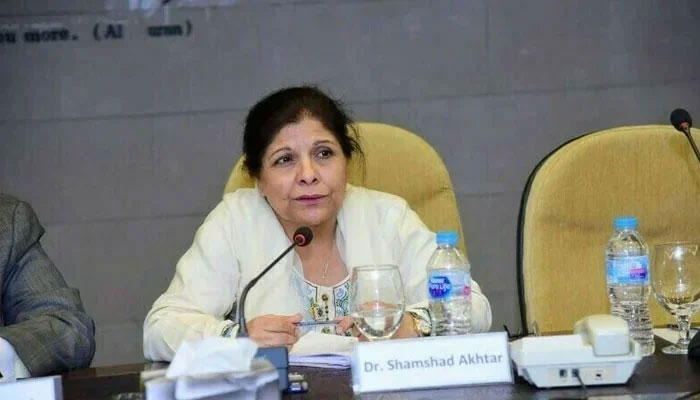
ISLAMABAD: Ruling out the possibility of making any requests to the IMF for increasing the timeframe or size of the Standby Arrangement (SBA) programme, Pakistani high-ups say that they would advise on materialising external financing gap after the completion of a successful review.
Pakistan and the IMF high-ups have continued parleys for striking a staff-level agreement under the $3 billion SBA programme from November 2 and the talks would conclude on November 15, 2023. Minister for Finance Dr Shamshad Akhtar and the IMF’s Mission Chief Nathan Porter led the delegations of both sides and also held one-on-one meetings during this week.
This scribe contacted Minister for Finance Dr Shamshad Akhtar to inquire about any possibility of making a request to the IMF for an increase in the timeframe and size of the SBA programme from March to June 2024 and jacking up the size from the existing $3 billion to $3.5-$4 billion, the Minister for Finance categorically replied, “No”.
To another query regarding the external financing gap, the minister replied that she would advise after the review.
Another top official who is privy to ongoing talks with the IMF said that the programme loans from the multilateral creditors including the World Bank, Asian Development Bank, Asian Infrastructure Investment Bank, and Islamic Development Bank (IsDB) were linked with the successful ongoing review of the IMF programme.
The IMF has assessed that Pakistan requires gross external financing of slightly over $29 billion including external debt servicing of $24.5 billion and a current account deficit of $4.5 billion. Now Pakistan is expecting rollover of deposits and commercial refinancing of $11 billion from bilateral friends, Islamabad would have to secure external loans of $18 billion in the current fiscal year provided all other dollar inflow targets such as exports, remittances, and foreign direct investment materialised up to the envisaged mark.
There are some serious risks to the debt dollar inflows including a $5 billion commercial loan, $1.5 billion through launching international bonds, and $500 to $750 million from IsDB through ITFC out of committed $1 billion.
If interest rates at the global level especially in the USA eased down and oil prices in the international market tumbled then Islamabad would be able to secure breathing space otherwise its external financing crunch might become a serious threat.
Independent economists are predicting that the external financing gap might be hovering around $6 to $7 billion for the current fiscal year. It is the most serious threat to the economy and stability of the exchange rate.
On the fiscal front, the official sources said that the IMF and FBR high-ups discussed structural changes in tax administration, tax policy, tax administration, documentation/digitization, track and trace system, and its implementation for major revenue spinner sectors including sugar, tobacco, cement, and others. So far the FBR’s annual tax collection target of Rs9415 billion was kept unchanged during the technical level rounds of parleys between the two sides.
In the energy sector, the IMF raised questions about the delayed increase in gas tariff from November 2023 against the commitment with the Fund to increase it with effect from July 1, 2023. The government is also supposed to increase the gas tariff from January 1, 2024.
In the power sector, official sources told the IMF that the government released a subsidy amount of around Rs70 billion in the first week of October 2023. It is relevant to mention here that the government had only released Rs2.5 billion subsidy amount in the first quarter (July-Sept) period against the total allocation of Rs1,064 billion for the whole financial year 2023-24.
The power sector’s distribution companies’ losses were estimated at Rs589 billion out of which Rs200 billion could not be recovered. So the remaining Rs389 billion could be recovered and so far the government launched the anti-theft campaign and recovered approximately Rs50 billion. If this anti-theft action continued unabated in the remaining period the overall collection of electricity bills of power distribution companies could be improved by Rs200 to Rs250 billion so the annual losses could be reduced by 50 to 60 percent.
“We expect that 50 to 60 percent recovery of theft electricity could be collected in the current fiscal year out of a total of Rs589 billion,” said the top official.







-
 Pal Reveals Prince William’s ‘disorienting’ Turmoil Over Kate’s Cancer: ‘You Saw In His Eyes & The Way He Held Himself’
 -
 Poll Reveals Majority Of Americans' Views On Bad Bunny
 -
 Wiz Khalifa Thanks Aimee Aguilar For 'supporting Though Worst' After Dad's Death
 -
 Man Convicted After DNA Links Him To 20-year-old Rape Case
 -
 Royal Expert Shares Update In Kate Middleton's Relationship With Princess Eugenie, Beatrice
 -
 Andrew Mountbatten-Windsor’s Leaves King Charles With No Choice: ‘Its’ Not Business As Usual’
 -
 Dua Lipa Wishes Her 'always And Forever' Callum Turner Happy Birthday
 -
 Police Dressed As Money Heist, Captain America Raid Mobile Theft At Carnival
 -
 Winter Olympics 2026: Top Contenders Poised To Win Gold In Women’s Figure Skating
 -
 Inside The Moment King Charles Put Prince William In His Place For Speaking Against Andrew
 -
 Will AI Take Your Job After Graduation? Here’s What Research Really Says
 -
 California Cop Accused Of Using Bogus 911 Calls To Reach Ex-partner
 -
 AI Film School Trains Hollywood's Next Generation Of Filmmakers
 -
 Royal Expert Claims Meghan Markle Is 'running Out Of Friends'
 -
 Bruno Mars' Valentine's Day Surprise Labelled 'classy Promo Move'
 -
 Ed Sheeran Shares His Trick Of Turning Bad Memories Into Happy Ones