
From ideological to functional state
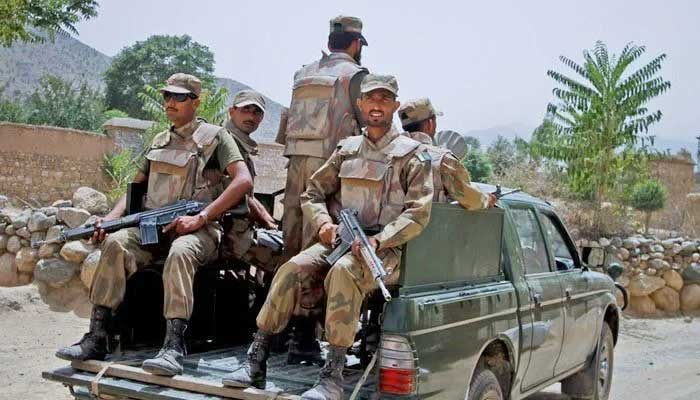
Soon after terrorists attacked a Pakistan Air Force base in Mianwali, Pakistan lost four soldiers, including a lieutenant colonel, in a firefight with terrorists in the Tirah Valley.
The Pakistan military has reiterated its resolve to eliminate terrorism, which has threatened Pakistan for at least the last quarter century. The country is continually facing blowback for considering some extremists as its strategic assets.
Even if one accepts the view that foreign enemies are behind terrorists operating in the country, the fact remains that the Pakistanis recruited for terrorism are led astray primarily by a false ideology. The ideology that leads some young Muslims into challenging the state is rooted in the belief that being a country with a 97 per cent Muslim population is not enough. Pakistan, as well as the rest of the Muslim world, needs to be ‘Islamized’.
Various groups, often representing sectarian affiliations, interpret the path to Islamization differently. Some demand legislation based on their interpretation of Islam. Others want rival sects to be declared unbelievers under law. And the most extreme see violence as the path to creating an Islamic order.
That Islam would matter in the life of a country inhabited predominantly by Muslims is understandable. But the insistence on making any country an Islamic ideological state has created an environment that is less conducive to making rational decisions. Even secular states that embrace hardline ideologies end up being totalitarian tyrannies. A state with a national ideology rooted in religion sets itself up for endless debates about how to translate religious dicta into modern laws and state policies.
Throughout history all religions have had to deal with differences among clerics. Letting religious ideology define its statehood has divided Pakistanis more than religion could unite them. In its report on the 1953 riots, the Munir Commission had warned that “The ulema were divided in their opinions when they were asked to cite some precedent of an Islamic state in Muslim history.”
In 117 sittings, the Munir Commission examined 3,600 pages of written statements and 2,700 pages of evidence. It studied 339 documents and “a large number of books, pamphlets, journals and newspapers.” It received and read “a large number of letters, each extending to several pages and a few to even more than a hundred pages.” After interviewing several ulema, Justice Munir pointed out that “no two learned divines are agreed” even on the fundamental definition of who is a Muslim.
“If we attempt our own definition as each learned divine has done and that definition differs from that given by all others, we unanimously go out of the fold of Islam,” Munir wrote somewhat sarcastically. “And if we adopt the definition given by any one of the ulema, we remain Muslims according to the view of that alim but kafirs according to the definition of everyone else.”
Writing in 1963, British newspaper editor Ian Stephens had rejected “any practical possibility” of Pakistan “falling under the sway of the mullahs, influential and active through some of them such as Maulana Maududi are.” In his opinion, the power of theocrats in Pakistan was less than in Israel, “that other ideological state of the 1940s.” We all know how wrong that assumption has turned out to be in subsequent years.
It is time for Pakistanis to be realistic and acknowledge that the currently defined ‘ideology of Pakistan’ nurtures extremist Islamism and obstructs Pakistan’s evolution as a normally functioning state. Pakistan’s pursuit of strategic objectives disproportionate to its capacity has been inadvertently encouraged by its alliance with the United States and China. Pakistan would have to abandon the narrow ideological paradigm of Pakistani nationalism and reorient its strategic approach if it wants to survive and succeed as a modern state.
Moreover, if Pakistan is here to stay, then its leaders must free its people of the burden of believing that it is constantly besieged and under threat. Armed with nuclear weapons, Pakistan does not need to live in fear or insecurity. Nor is Islam, which has thrived for more than 1400 years, in any danger. The state of insecurity fostered in Pakistan is psychological and should now be replaced with a logical self-confidence.
Terrorism under the moniker of jihad is now a threat to Pakistan and must be eliminated for Pakistan’s sake. The shift away from ideological nationalism to functional nationalism – “We are Pakistanis because we were born in Pakistan” as opposed to “We are Pakistanis because our forebears resolved to create an Islamic state” – will help change the milieu in which various extremist and terrorist groups recruit and operate in Pakistan.
Once the state is reconciled to a pluralist Pakistan open to multiple visions for the country’s future, extremists would have to contend for Pakistani hearts and minds rather than having a captive following – “We are fighting for Palestine, Kashmir, and Islam” – encouraged by a national narrative taught in schools and promoted by the national media.
Pakistan must also overcome archaic notions of national security. Instead of viewing itself as a ‘warrior nation’, it could be a ‘trading nation’ that can take advantage of its location for economic purposes. Pakistan could easily be the trans-shipment route for goods and services between India, the Middle East and Central Asia. It could have oil and gas pipelines running through it, with attending benefits.
India and Afghanistan would be major trading partners instead of being viewed as permanent enemies or strategic threats. High literacy, global connectivity, increased agricultural and industrial productivity, and a prosperous citizenry would be the goals of the state in a reimagined Pakistan. Most importantly, Pakistani civilians and soldiers would not have to die because of individuals misguided in the name of religion, nor would such misguided people be available for use by hostile foreign elements.
The writer, former ambassador of Pakistan to the US, is Diplomat-in-Residence at the Anwar Gargash Diplomatic Academy in Abu Dhabi and Senior Fellow at the Hudson Institute in Washington DC.







-
 Caleb McLaughlin Shares His Resume For This Major Role
 -
 King Charles Carries With ‘dignity’ As Andrew Lets Down
 -
 Brooklyn Beckham Covers Up More Tattoos Linked To His Family Amid Rift
 -
 Shamed Andrew Agreed To ‘go Quietly’ If King Protects Daughters
 -
 Candace Cameron Bure Says She’s Supporting Lori Loughlin After Separation From Mossimo Giannulli
 -
 Princess Beatrice, Eugenie Are ‘not Innocent’ In Epstein Drama
 -
 Reese Witherspoon Goes 'boss' Mode On 'Legally Blonde' Prequel
 -
 Chris Hemsworth And Elsa Pataky Open Up About Raising Their Three Children In Australia
 -
 Record Set Straight On King Charles’ Reason For Financially Supporting Andrew And Not Harry
 -
 Michael Douglas Breaks Silence On Jack Nicholson's Constant Teasing
 -
 How Prince Edward Was ‘bullied’ By Brother Andrew Mountbatten Windsor
 -
 'Kryptonite' Singer Brad Arnold Loses Battle With Cancer
 -
 Gabourey Sidibe Gets Candid About Balancing Motherhood And Career
 -
 Katherine Schwarzenegger Shares Sweet Detail From Early Romance Days With Chris Pratt
 -
 Jennifer Hudson Gets Candid About Kelly Clarkson Calling It Day From Her Show
 -
 Princess Diana, Sarah Ferguson Intense Rivalry Laid Bare