
Textile exports rebound in October after months of slump
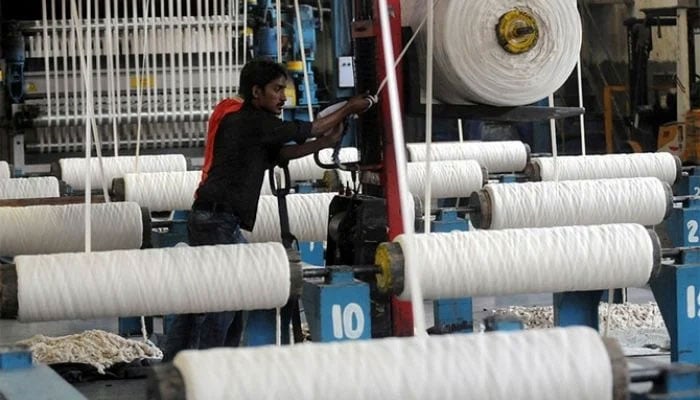
Islamabad: Pakistan's textile exports, the backbone of its economy, rose for the first time in 10 months in October, signaling a potential recovery for the industry that has been battered by rising input costs and a global recession.
Textile shipments increased by 5 percent to $1.43 billion in October from a year earlier, according to data from the All Pakistan Textile Mills Association (APTMA). This was the first month of positive growth since January.
However, textile exports in the first four months of the current fiscal year, which started in July, declined by 7 percent to $5.55 billion from the same period last year. The data also shows that during the 10-month period in calendar year 2023, textile exports fell by 16 percent to $13.14 billion from $15.88 billion registered in the same period of calendar year 2022.
In January 2023, textile exports tumbled by 15 percent to $1.32 billion from $1.55 billion in the same month of calendar year 2022. In February, exports fell by 30 percent to $1.18 billion from $1.67 billion in the same month of 2022. February registered the highest negative growth.
The downward trend in exports continued till September: in March, exports fell by 23 percent; in April, 29 percent; in May, 20 percent; in June, 14 percent; in July, 11 percent; in August, 7 percent; and in September, 11 percent.
"It is a matter of pride that due to collective efforts, we are observing positive trends related to a significant reduction in our trade deficit," said Gohar Ejaz, minister for Commerce and Industries, on social media platform X, formerly Twetter.
Ejaz said the country is now witnessing economic stabilisation, as the trade deficit squeezed to $7.42 billion in the first four months of the current fiscal year (FY24) from $11.36 billion in the same period of FY23, due to the fact that imports during July-October 2023 went down to $17.03 billion from $20.91 billion in the same period of 2022. Likewise, exports during July-October 2023 stayed at $9.61 billion, which were at $9.55 billion in the same period of 2022.
Last month, APTMA asked the government to lower the electricity tariffs for the textile sector to make it competitive with regional countries. APTMA sought electricity tariff without cross subsidy of 10.85 rupees per unit being extended to non-productive sectors. The textile industry is currently paying 16 cents per kilowatt-hour (kWh) for power, which is higher than the tariffs in Bangladesh, India and Vietnam.







-
 Winter Olympics 2026: Top Contenders Poised To Win Gold In Women’s Figure Skating
 -
 Inside The Moment King Charles Put Prince William In His Place For Speaking Against Andrew
 -
 Will AI Take Your Job After Graduation? Here’s What Research Really Says
 -
 California Cop Accused Of Using Bogus 911 Calls To Reach Ex-partner
 -
 AI Film School Trains Hollywood's Next Generation Of Filmmakers
 -
 Royal Expert Claims Meghan Markle Is 'running Out Of Friends'
 -
 Bruno Mars' Valentine's Day Surprise Labelled 'classy Promo Move'
 -
 Ed Sheeran Shares His Trick Of Turning Bad Memories Into Happy Ones
 -
 Teyana Taylor Reflects On Her Friendship With Julia Roberts
 -
 Bright Green Comet C/2024 E1 Nears Closest Approach Before Leaving Solar System
 -
 Meghan Markle Warns Prince Harry As Royal Family Lands In 'biggest Crises' Since Death Of Princess Diana
 -
 Elon Musk Weighs Parenthood Against AI Boom, Sparking Public Debate
 -
 'Elderly' Nanny Arrested By ICE Outside Employer's Home, Freed After Judge's Order
 -
 Keke Palmer On Managing Growing Career With 2-year-old Son: 'It's A Lot'
 -
 Key Details From Germany's Multimillion-euro Heist Revealed
 -
 David E. Kelley Breaks Vow To Cast Wife Michelle Pfeiffer In 'Margo's Got Money Troubles'