
Pakistani stargazers to be treated to lunar eclipse
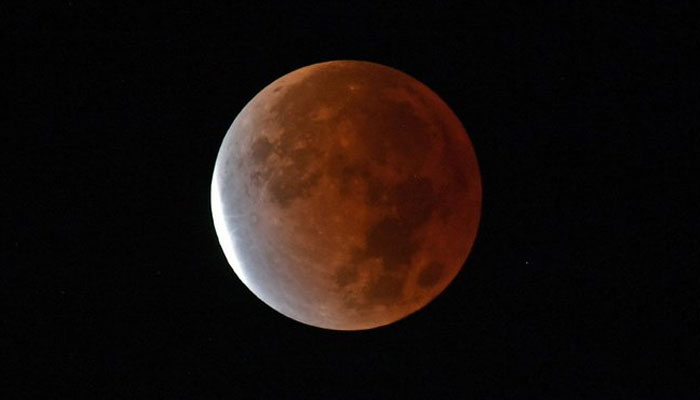
ISLAMABAD: A lunar eclipse is set to grace skies in different parts of the world on Saturday (today) at 11:01pm, which will be the last chance to witness a grand celestial event this year for those who love peering into the skies.
Tomorrow’s lunar eclipse will be a partial penumbral lunar eclipse, as per a report published by Earth Sky — occurring for the second and last time in 2023 just two weeks after the last solar eclipse of 2023 that happened on October 14.
Earlier, the phenomenon occurred at the start of May this year.
The eclipse will be visible in parts of Europe, Asia, Australia, Africa, North America, North/East South America, Pacific, Atlantic, Indian Ocean, Arctic and Antarctica.
The Pakistan Meteorological Department (PMD) said that the October 28 lunar eclipse will also be seen in Pakistan.
It said that the eclipse would start in the wee hours of Saturday at 11:02pm (local time), peak at 01:14am and end at 03:26am on October 29 (Sunday).







-
 King Charles, Princess Anne, Prince Edward Still Shield Andrew From Police
 -
 US Set To Block Chinese Software From Smart And Connected Cars
 -
 Carmen Electra Says THIS Taught Her Romance
 -
 Leonardo DiCaprio's Co-star Reflects On His Viral Moment At Golden Globes
 -
 SpaceX Pivots From Mars Plans To Prioritize 2027 Moon Landing
 -
 King Charles Still Cares About Meghan Markle
 -
 J. Cole Brings Back Old-school CD Sales For 'The Fall-Off' Release
 -
 GTA 6 Built By Hand, Street By Street, Rockstar Confirms Ahead Of Launch
 -
 Funeral Home Owner Sentenced To 40 Years For Selling Corpses, Faking Ashes
 -
 Why Is Thor Portrayed Differently In Marvel Movies?
 -
 Dutch Seismologist Hints At 'surprise’ Quake In Coming Days
 -
 Australia’s Liberal-National Coalition Reunites After Brief Split Over Hate Laws
 -
 DC Director Gives Hopeful Message As Questions Raised Over 'Blue Beetle's Future
 -
 King Charles New Plans For Andrew In Norfolk Exposed
 -
 What You Need To Know About Ischemic Stroke
 -
 Shocking Reason Behind Type 2 Diabetes Revealed By Scientists