
India may prevent declassification of ‘sensitive’ 1947 Kashmir papers
In 2019, the BJP government formally revoked Kashmir's constitutional autonomy in an attempt to integrate it fully into India
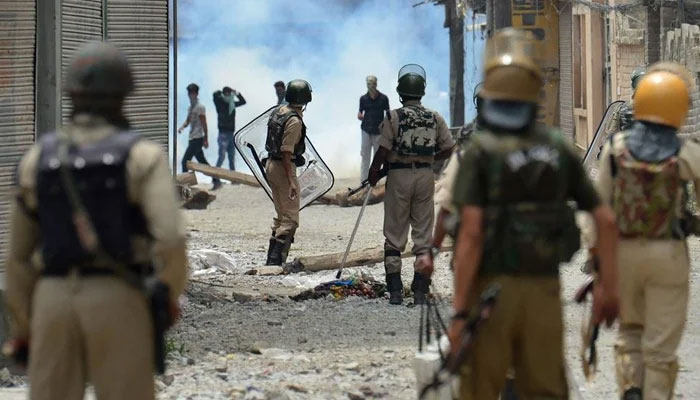
NEW DELHI: India may prevent the declassification of papers from 1947 related to Kashmir, as it fears the “sensitive” letters might affect foreign relations, according to internal government documents seen by the Guardian.
The letters, known as the Bucher papers, are believed to include political and military arguments for why India’s first Prime Minister Jawaharlal Nehru, called for a ceasefire with Pakistan and provided a special status to the state of Jammu and Kashmir.
For decades the region in the foothills of the Himalayas was given a separate constitution, a flag, and autonomy over all matters except for foreign affairs and defence. Those measures were seen by Kashmiris as crucial to protecting their rights in the Muslim-majority state. But in 2019, under the Hindu nationalist Prime Minister Narendra Modi, the government in Delhi formally revoked the state’s constitutional autonomy in an attempt to integrate it fully into India.
The decision tightened the government’s grip over the region and stoked anger and resentment as a three-decade armed revolt continued to rage.
The Bucher papers refer to communications between Gen Sir Francis Robert Roy Bucher, who served as second commander-in-chief of the Indian Army between 1948 and 1949, and government officials, including Nehru.
Over the years, several attempts have been made by activists to declassify the papers to throw light on the reasoning for Article 370, which gave Jammu and Kashmir its special status.
A recent foreign ministry document seen by the Guardian said the contents of the papers should not be declassified yet. The papers contain “military operational matters in Kashmir and correspondences amongst senior government leaders on sensitive political matters on Kashmir”, the document said.
The papers have been kept at the Nehru Memorial Museum and Library, an autonomous body under India’s culture ministry.
According to a source with knowledge of the matter, they reveal that Nehru was aware and informed of the military development in Kashmir.
“Roy Bucher suggested a political approach to solve the escalating situation given military fatigue faced by Indian troops due to 13 months of military deployment, including taking the matter before the United Nations,” the source said.
That advice may have influenced Nehru’s decision to grant Kashmir special status. In 1952, the prime minister argued that the aspirations of the people of Kashmir should be respected.
“I want to stress that it is only the people of Kashmir who can decide the future of Kashmir,” he told India’s parliament. “We are not going to impose ourselves on them on the point of the bayonet.”
The Bucher papers were handed over by India’s external affairs ministry to the Nehru museum and library in New Delhi in 1970, with a note saying they should be kept “classified”. They have remained in the library’s closed collection since then, the foreign ministry document said.
An Indian activist, Venkatesh Nayak, has filed multiple appeals to declassify the papers, a move that was initially rejected. However, in 2021 the Indian information commissioner ruled it was in the “national interest” but fell short of ordering the disclosure of the crucial documents. The order advised that the library may seek the foreign ministry’s permission to declassify the papers for academic research.
In a letter dated 12 October 2022 that has been reviewed by the Guardian, the chair of the museum and library, Nripendra Misra, wrote to India’s foreign secretary arguing the papers “are very important for scholarly research” and requested declassification.
“We have read the contents of the Bucher papers. Our view is that the papers need not remain ‘classified’ beyond the reach of academicians. We are opening papers of other important public figures also,” Misra argued.
India typically allows the declassification of archival documents after 25 years.
The foreign ministry argued in the document that the disclosure of the papers should be put in “abeyance” for the time being and advised that the “sensitivity of Roy Bucher papers and the likely implications of their disclosure” should be examined further.
Sources say the Indian government has yet to take a final decision on the matter.
The Guardian has contacted the Indian foreign ministry and the Nehru Memorial Museum and Library for a response.







-
 Savannah Guthrie Mom Update: Unexpected Visitors Spark Mystery Outside Nancy's Home
 -
 Elle Fanning Shares Detail About Upcoming Oscars Night Plan With Surprise Date
 -
 Demi Lovato Spills Go-to Trick To Beat Social Anxiety At Parties
 -
 Benny Blanco Looks Back At The Time Selena Gomez Lost Her Handrwritten Vows Days Before Wedding
 -
 Naomi Watts Reveals Why She Won't Get A Facelift In Her 50s
 -
 Travis Kelce's Mom Donna Fires Back At Critic With Sarcastic Reply After Body Jab
 -
 Kendall Jenner Gets Candid About Her Differences With The Kardashian Clan Over Style Choices
 -
 Sam Altman Opens Up About OpenAI, Anthropic, Pentagon Conflict
 -
 Brenda Song Confesses Fascination With Conspiracy Theories
 -
 Lunar Eclipse 2026: Time, Date, Sighting Locations, Know Every Detail
 -
 Death Toll Climbs To 54 As Floods Wreck South-eastern Brazil
 -
 Katie Price Drops Bombshell Plan To Cash In On Marriage
 -
 Ryan Gosling Shares How Daughters' 'honest' Feedback Keeps Him Grounded
 -
 Neve Campbell Explains Why She Avoids Watching Scary Movies As She Returns To 'Scream 7'
 -
 Milan Tram Crash Leaves Two Dead, 39 Injured
 -
 Timothee Chalamet Touches On His Personality's Relatability With 'Marty Supreme' Role