
Ideological crisis
The Council of Islamic Ideology has pressed forward with the crisis of ideological belief that has been dividing our country, particularly over the past few days. The latest law to have – predictably – drawn the ire of Maulana Muhammed Khan Sheerani, the head of the CII, is the Women’s Protection Bill. Passed by the Punjab Assembly, this law is a long overdue effort to provide victims of domestic violence the opportunity to seek safety and redress in court, while also compelling the government to offer them shelter and take police action against abusive husbands. Sheerani has denounced the bill as being against Shariah and in violation of Islamic principles. Having denounced the bill without even reading it, reportedly the CII is now looking at it in detail. Not many are waiting with bated breath for the outcome. Oddly, the CII has even stated that the Women’s Protection Bill is against the Two Nation Theory. The council is also studying a bill to protect women sent to it by the KP Assembly for consideration. If Sheerani’s statements are anything to go by, the council will disapprove of that bill too.
It is quite obvious to most observers that a law to better protect women against domestic violence is urgently required. The prime minister himself advocated this when he promised new measures would be brought in to stem the tide of honour killing. It is unfortunate that confusion is being created over matters that should really not be in doubt. The stance taken by the CII on many issues, including child marriages, has been controversial. Its opposition to the Women’s Protection Bill adds to the debate surrounding the role of the body and the direction in which it is taking the country. Sheerani must also be miffed that the Punjab government, on the advice of its law department, decided to pass the bill without seeking the approval of the CII. That it did so is to the credit of the government. It is also time for us to think about the role of the CII in our political system. Many of its verdicts seem to be determined by the composition of the council at a particular point in time rather than a true effort to analyse what is required and what falls within the purview of the body. Its interpretations of religious edicts have too often been limited and narrow-minded. It is telling that in his complaints about the Punjab Assembly, Sheerani mentioned that the CII was never bypassed when Ziaul Haq was in power. Democracy and rule of law do not appear to loom large in Maulana Sheerani’s worldview.







-
 Lana Del Rey Announces New Single Co-written With Husband Jeremy Dufrene
 -
 Ukraine-Russia Talks Heat Up As Zelenskyy Warns Of US Pressure Before Elections
 -
 Lil Nas X Spotted Buying Used Refrigerator After Backlash Over Nude Public Meltdown
 -
 Caleb McLaughlin Shares His Resume For This Major Role
 -
 King Charles Carries With ‘dignity’ As Andrew Lets Down
 -
 Brooklyn Beckham Covers Up More Tattoos Linked To His Family Amid Rift
 -
 Shamed Andrew Agreed To ‘go Quietly’ If King Protects Daughters
 -
 Candace Cameron Bure Says She’s Supporting Lori Loughlin After Separation From Mossimo Giannulli
 -
 Princess Beatrice, Eugenie Are ‘not Innocent’ In Epstein Drama
 -
 Reese Witherspoon Goes 'boss' Mode On 'Legally Blonde' Prequel
 -
 Chris Hemsworth And Elsa Pataky Open Up About Raising Their Three Children In Australia
 -
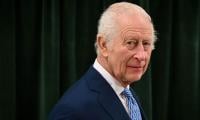 Record Set Straight On King Charles’ Reason For Financially Supporting Andrew And Not Harry
 -
 Michael Douglas Breaks Silence On Jack Nicholson's Constant Teasing
 -
 How Prince Edward Was ‘bullied’ By Brother Andrew Mountbatten Windsor
 -
 'Kryptonite' Singer Brad Arnold Loses Battle With Cancer
 -
 Gabourey Sidibe Gets Candid About Balancing Motherhood And Career