
US tech companies unite behind Apple
NEW YORK: Tech industry leaders including Alphabet Inc's Google, Facebook Inc, Microsoft Corp, AT&T and more than two dozen other Internet and technology companies filed legal briefs on Thursday asking a judge to support Apple Inc in its encryption battle with the U.S. government.
The rare display of unity and support from Apple's sometime-rivals showed the breadth of Silicon Valley's opposition to the government's anti-encryption effort.
Apple's battle became public last month when the Federal Bureau of Investigation obtained a court order requiring the company to write new software to disable passcode protection and allow access to an iPhone used by one of the shooters in the December killings in San Bernardino, California.
Apple pushed back, arguing that such a move would set a dangerous precedent and threaten customer security, and asked that the order be vacated. The clash has intensified a long-running debate over how much law enforcement and intelligence officials should be able to monitor digital communications.
Apple's industry allies, along with several privacy advocates, filed amicus briefs - a form of comment from outside groups common in complex cases - to U.S. District Judge Sheri Pym, in Riverside, California, who had set a Thursday deadline.
Six relatives of San Bernardino attack victims on Thursday weighed in with their own amicus brief opposing Apple. Three California law enforcement groups, three federal law enforcement groups and the San Bernardino district attorney also filed in favor of the government.
The companies backing Apple largely echo the iPhone maker's main argument, that the 1789 All Writs Act at the heart of the government's case cannot be used to force companies to create new technology.
One amicus filing, from a group of 17 Internet companies including Twitter Inc and LinkedIn Corp, asserted that Congress has already passed laws that establish what companies could be obliged to do for the government, and that the court case amounted to an "end run" around those laws.
Apple, and some of the other briefs, did not go quite that far, but also asserted that Congress, not the courts, needed to address the issue.







-
 Princess Kate Talks About 'hard Conversations' With Kids Amid Andrew Drama
 -
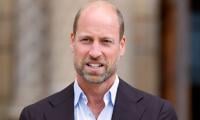 Prince William Mocked For Being ‘most Reluctant’ King-in-waiting
 -
 Prince William Makes Rare Admission After Andrew Arrest
 -
 ‘Got A Lot Of People Gunning For Me’: Trump Makes First Comments On Mar-a-Lago Intruder
 -
 What Countries Have A Say In Andrew Removal From Line Of Succession?
 -
 How Did Luci4 Die? Police Probes 'BodyPartz' Sudden 'suspicious' Death
 -
 King Charles Criticized By Princess Anne Over Andrew Drama
 -
 Hailee Steinfeld Details Preparations Ahead Of Welcoming First Kid With Josh Allen
 -
 Shocking Details Revealed About Gunman 'Austin Tucker' Shot Dead At Trump’s Resort 'Mar-a-Lago'
 -
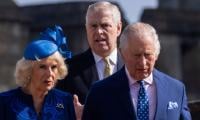 Queen Camilla Meets Gisèle Pelicot, Sends Powerful Message To Victims As Andrew's Scandal Deepens
 -
 Cancer-stricken King Charles At Breaking Point?
 -
 Andrew Leaves King Charles No More Moves To Play: ‘Can’t Just Say We Got Nothing’
 -
 Sterling K. Brown Explains How Sharing His Kids' Photos On Social Media Can Keep Them Safe
 -
 Keir Starmer Gives Major Advise To King Charles Amid Andrew Scandal
 -
 Nick Reiner Pleads Not Guilty In Famous Parents' Double Murder Which Shocked The World
 -
 Benicio Del Toro On Losing Mom In Chldhood: 'I’m Still Dealing With It'