
Peshawar air quality at dangerous level
Peshawar was ranked the most hazardous air quality city in the world with a distinction of 590 Air Quality Index (AQI) on November 27 at 9pm
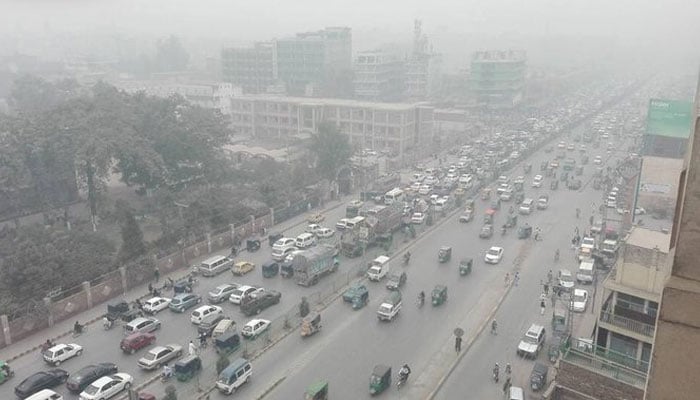
PESHAWAR: In a shocking development, Peshawar was ranked the most hazardous air quality city in the world with a distinction of 590 Air Quality Index (AQI) on November 27 at 9pm.
One day later (Nov 28) at 10pm, a US website ranked Peshawar with hazardous distinction at 444 AQI. The city’s air quality is 500 times more dangerous than the guidelines issued by the WHO.
Experts say population of Peshawar is at greater risk of lung damage by smog, which can activate dormant tuberculosis. High levels of smog during the winter trigger asthma attacks, leading to wheezing attacks and shortness of breath, which increase chances of premature death from respiratory ailments and cancers.
The Peshawar Clean Air Alliance, a voluntary civil society organisation comprising academics, medical and public health experts, students and activists, has shown serious concern about the air quality of Peshawar. Convener of Peshawar Clean Air Alliance and Sarhad Conservation Network, Dr Adil Zareef said many factors have contributed to highly toxic air quality in major cities of Pakistan. Lahore and Peshawar have been competing with New Delhi with equally worse indicators.
“Among other factors are a huge population influx from the merged districts to Peshawar and the corresponding increase in vehicular traffic, smoke-emitting industries and informal small industrial units, especially unregulated brick kilns which mainly use rubber and other toxic materials enveloping Peshawar in deadly smog,” he said.
Dr Adil said huge clouds of charcoal smoke can be seen enveloping Hayatabad Phase 1, 5 and 7 and adjoining industrial zones, particularly Shahkas area, after sunset. The KP government is planning to establish VETs and ban unregulated vehicles. It would be a difficult exercise as Peshawar boasts the highest number of unregistered vehicles clogging the traffic, he remarked.
Flaws in the BRT design have narrowed the previously smooth-running main artery, which becomes congested during peak hours. Higher pollution levels are an outcome of slow and restricted movement with bottlenecks along the Khyber Road corridors, he said.
The government should exercise zero tolerance for vehicular and industrial emissions by introducing the concept of trained green policing by traffic wardens and capacity-building of EPA with green penalties and fines to offenders, he observed.
Dr Saadia Ashraf, head of the Pulmonology Department at KTH, said “population is at greater risk of lung damage by high levels of smog during the winters as it triggers chronic pulmonary diseases and cancers leading to premature death, besides allergies, cough and irritation in eyes, throat and nose. It severely affects cognitive (mental) development of young children,” she said.
Dr Amber Ashraf, head of Cardiology Department at KTH, has reported an increase in cardiovascular diseases, stroke, hypertension and related diseases. The government is being asked to take measures to reduce burden of preventable disease caused mostly due to noxious pollution, which has affected a large population of Peshawar.
Meanwhile, Peshawar Clean Air Alliance (PCAA) will hold its second meeting to review air quality monitoring network and KP government green policy today (Nov 30), and will share recommendations with the government. The PCAA has installed 12 high-quality air monitors in Peshawar with the collaborative support of SEED and BoK for evidence-based interventions.
Director General Environment Protection Agency, KP, Anwar Khan, told this correspondent the government has entered into a partnership with SEED and other organisations, including Bank of Khyber, and has installed Air Quality Meters, though at high-risk zones.
He said the government has taken both administrative and implementation measures for improving air quality through re-assessment of its vehicular emission functions, control over industrial units, implementing zig-zag technology in brick kilns and with improved traffic management. Civil society and the public also need to come forward and become agents of change. The government, on its end, will continue making efforts to bring about further improvement, he said.







-
 World Economic Forum CEO Borge Brende Steps Down Following Jeffrey Epstein Ties Controversy
 -
 Prince Harry's Ex Chelsy Davy Makes Special Announcement
 -
 Dominic Evans Speaks Out After Being Accused Of Being Involved In Nancy Guthrie Kidnapping
 -
 AI Doomsday By 2028? New Study Warns Of Global Social, Economic Disruption & ‘ Intelligence Crisis’
 -
 Do Sophie And Benedict Bridgerton Get Married As Netflix Show Returns For Season 4 Part 2?
 -
 Prince William Reveals He's 'a Little Biased' Toward One Hollywood Star
 -
 Meghan Markle, Prince Harry Visit Special Charity On Final Day Of Jordan Trip
 -
 Natalie Dormer's Reaction To Sarah Ferguson's Epstein Links Resurfaces After 'The Lady' Release
 -
 Did You Know Famous Windows 10 Background Was Shot In Real Life? Here's Story
 -
 Pete Davidson's Baby Mommy Elsie Hewitt Reveals Why She 'hated' Being Pregnant
 -
 Harry, Meghan Show Royal Family How To Make Impact Without Public Money
 -
 Hillary Clinton Set For Deposition Before House Committee Today In Jeffrey Epstein Investigation Case
 -
 Samsung Galaxy S26 Ultra Debutes With Display That Blocks Side Viewers
 -
 Fans In Shock As 'Smiling Friends' Creators End Cult-favourite Sitcom On Adult Swim: 'They Did It On Purpose'
 -
 Meghan Markle Accused Of Mimicking Kate’s Iconic Style On 'pseudo Royal Tour'
 -
 Social Media Addiction ‘like Smoking’: Mumsnet Calls For Under-16s Ban With Cigarette-style Warnings