
Nomura warns Pakistan faces currency crisis danger
Japan's top brokerage and investment bank has warned that seven countries - Egypt, Romania, Sri Lanka, Turkey, Czech Republic, Pakistan and Hungary - are now at a high risk of currency crises
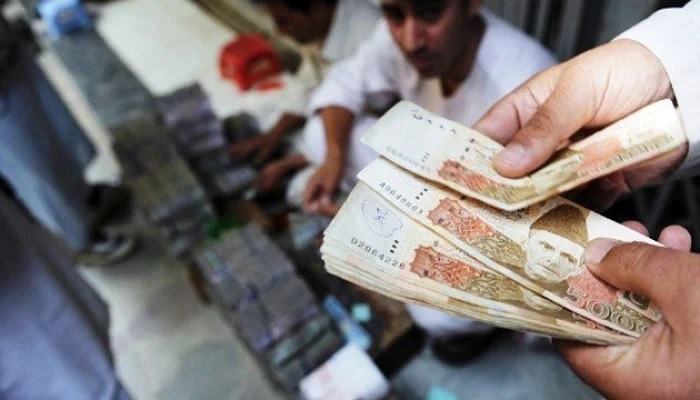
LONDON: Nomura Holdings Inc, Japan's top brokerage and investment bank, has warned that seven countries - Egypt, Romania, Sri Lanka, Turkey, Czech Republic, Pakistan and Hungary - are now at a high risk of currency crises, Reuters reported.
The Japanese bank said that 22 of the 32 countries covered by its in-house "Damocles" warning system have seen their risk rise since its last update since May, with the largest increases in the Czech Republic and Brazil. It meant the sum of the scores generated on all 32 by the model had increased sharply to 2,234 from 1,744 since May.
"This is the highest total score since July 1999 and not too far from the peak of 2,692 during the height of the Asian crisis," Nomura economists said, calling it "an ominous warning sign of the growing broad-based risk in EM currencies".
The model crunches 8 key indicators on a country's FX reserves, exchange rate, financial health and interest rates to give an overall score.
Based on data from 61 different EM currency crises since 1996, Nomura estimates that a score above 100 indicates a 64 percent chance of a currency crisis in the following 12 months.
Egypt, which has already devalued its currency heavily twice this year and sought an International Monetary Fund (IMF) programme, now generates the worst score at 165.
Romania is next on 145 having been propping up its currency with interventions. Default-stricken Sri Lanka and currency crisis-regular Turkey both generate scores of 138, while the Czech Republic, Pakistan and Hungary notch 126, 120 and 100 respectively.
Nomura also ran the Damocles model on the G7 group of leading economies, with the results showing that all but Japan now have Damocles scores above the 100 threshold, led by the United States and Britain.
EM economies are still more vulnerable. Most have not fully recovered from the COVID-19 pandemic and now face high inflation, limited fiscal space, negative real interest rates, a weaker balance of payments and diminished FX reserve cover.
"It is somewhat surprising that there have not been more full-blown EM currency crises this year," Nomura added. "Then again, EM challenges are far from over... The late Professor Rudiger Dornbusch once said, A crisis takes a much longer time coming than you think, and then it happens much faster than you would have thought".







-
 King Charles Is ‘clearly Worried’ Andrew Has Tarnished Royal Image
 -
 Royal Family Loses 'loyal' Worker After King Charles Disliked His Work?
 -
 James Van Der Beek's Quiet Sacrifice Before Death Comes To Light
 -
 Suspect Kills Six Across Florida Before Taking His Own Life
 -
 AI Helps Researchers Identify 2,000-year-old Roman Board Game Stone
 -
 Inside Kate Middleton, Prince William’s Nightmare Facing Andrew Mountbatten-Windsor
 -
 Margaret Qualley Shares Heartfelt Confession About Husband Jack Antonoff: 'My Person'
 -
 Savannah Guthrie Shares Sweet Childhood Video With Missing Mom Nancy: Watch
 -
 Over $1.5 Million Raised To Support Van Der Beek's Family
 -
 Paul Anthony Kelly Opens Up On 'nervousness' Of Playing JFK Jr.
 -
 Diana Once Used Salad Dressing As A Weapon Against Charles: Inside Their Fight From A Staffers Eyes
 -
 Video Of Brad Pitt, Tom Cruise 'fighting' Over Epstein Shocks Hollywood Fans
 -
 Jelly Roll's Wife Bunnie Xo Talks About His Huge Weight Loss
 -
 Margot Robbie Reveals Why She Clicked So Fast With Jacob Elordi
 -
 Piers Morgan Praised By Ukrainian President Over 'principled Stance' On Winter Olympics Controversy
 -
 Halsey's Fiance Avan Jogia Shares Rare Update On Wedding Planning