
Coronavirus: one in five patients hospitalised in Germany died, says study
Older patients were significantly more vulnerable, as 27% percent of patients in their 70s died while 38% of those above 80 years old failed to pull through
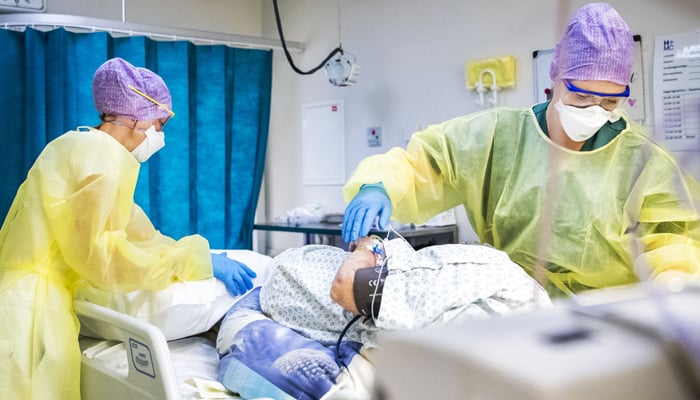
BERLIN: One in five patients hospitalised in Germany over the coronavirus succumbed to the disease, with the fatality rate rising to 53% for those who received ventilation, a study showed Wednesday.
Data of 10,000 patients admitted to 930 German hospitals between February 26 and April 19 were analysed by the German Interdisciplinary Association of Critical Care and Emergency Medicine, the Technical University of Berlin and AOK health insurance group´s research arm WIdO.
Hospitalised male patients had a higher mortality rate than women, with 25% compared to 19%.
Older patients were also significantly more vulnerable, as 27% percent of patients in their 70s died while 38% of those above 80 years old failed to pull through.
"These high mortality rates clearly show that a relatively high number of patients with a very serious course of disease were treated in hospitals," said Juergen Klauber, director of WIdO.
"Such serious course of diseases mainly affect older people and people whose health is already compromised, but also occur in younger patients," he warned, urging the population to take necessary precautions to prevent new infections.
Of the 10,021 patients, 1,727 were given mechanical ventilation. While almost twice as many who received ventilation were men, the mortality rates were similar gender-wise, the study said.
Patients were staying in hospitals for an average of 14 days, with those not on ventilation hospitalised for an average of 12 days while the duration for those who needed help breathing rose to 25 days.
Reinhard Busse, professor of healthcare management at TU Berlin, noted that on average, 240 days of ventilation would be required for every 100 hospitalised patients.
"These are important numbers to prepare for a second wave of the pandemic. However, we do not anticipate any problems with normal hospital beds, even with high infection rates," he added.
Thanks to its decentralised healthcare system, Germany has been able to significantly ramp up its capacity to treat COVID-19 patients, avoiding scenes like in Italy where some hospitals were overwhelmed by the sudden huge caseload.
However, health experts have urged against complacency, with the head of the RKI disease control agency, Lothar Wieler, repeatedly urging the population to keep to hygiene rules like social distancing or mask wearing.
With the summer holiday season in full swing, politicians are also watching anxiously at infection numbers which have ticked up in recent weeks.
As of Wednesday, Germany has recorded 206,926 cases of infections including 9,128 deaths.






-
 EU court adviser rejects Meta Platforms challenge over Facebook data
 -
 Oscar nominated Michael B Jordan reveals one 'Sinners' scene entire cast saw filmed
 -
 World Economic Forum CEO Borge Brende steps down following Jeffrey Epstein ties controversy
 -
 Hillary Clinton set for deposition before House committee today in Jeffrey Epstein investigation case
 -
 Kim Jong Un says North Korea ready to ‘get along’ with US but sets key condition
 -
 Trump’s tariff turmoil yet to significantly dent growth in emerging economies, despite raising trade tensions
 -
 Kash Patel fires FBI officials behind Trump Mar-a-Lago documents probe, reports say
 -
 Cuban government says boat full of armed men fired on border guards, killing 4