
Dinosaurs not in decline before asteroid hit: study
Poor fossil record has been found by new study as reason behind species' apparent rarity
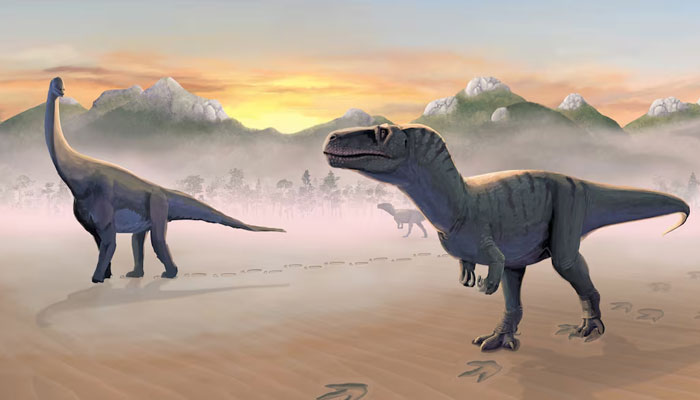
Dinosaurs were not in decline before the asteroid hit, instead poor fossilisation conditions and unexposed late Cretaceous rock layers mean they're either not preserved or hard to find, as per a new study.
Prior to the asteroid impact at the end of the Cretaceous period, it has been long indicated by fossil discoveries that dinosaurs were shrinking in numbers and diversity, reported Live Science.
Some researchers believed previously that this was a sign that dinosaurs were already on the road toward extinction even before the cataclysmic encounter with a space rock.
However, with other researchers arguing that dinosaur diversity was doing just fine at the time of their demise, this idea has long been controversial.
It was suggested by new research published on Tuesday in the journal Current Biology that the apparent rarity of dinosaurs before their extinction may simply be due to a poor fossil record.
Records of around 8,000 fossils from North America dating to the Campanian age (83.6 million to 72.1 million years ago) and Maastrichtian age (72.1 million to 66 million years ago) were studied by the scientists.
They focused on four families: the Ankylosauridae, Ceratopsidae, Hadrosauridae and Tyrannosauridae.
Their analysis, at face value, showed that dinosaur diversity peaked around 76 million years ago, then shrank until the asteroid strike wiped out the nonavian dinosaurs.
With the number of fossils from all four families decreasing in the geological record, this trend was even more pronounced in the 6 million years before the mass extinction.
However, the researchers found that there is no indication of environmental conditions or other factors that would explain this decline.


-
 Polar vortex ‘exceptional’ disruption: Rare shift signals extreme February winter
 -
 Netherlands repatriates 3500-year-old Egyptian sculpture looted during Arab Spring
 -
 Archaeologists recreate 3,500-year-old Egyptian perfumes for modern museums
 -
 Smartphones in orbit? NASA’s Crew-12 and Artemis II missions to use latest mobile tech
 -
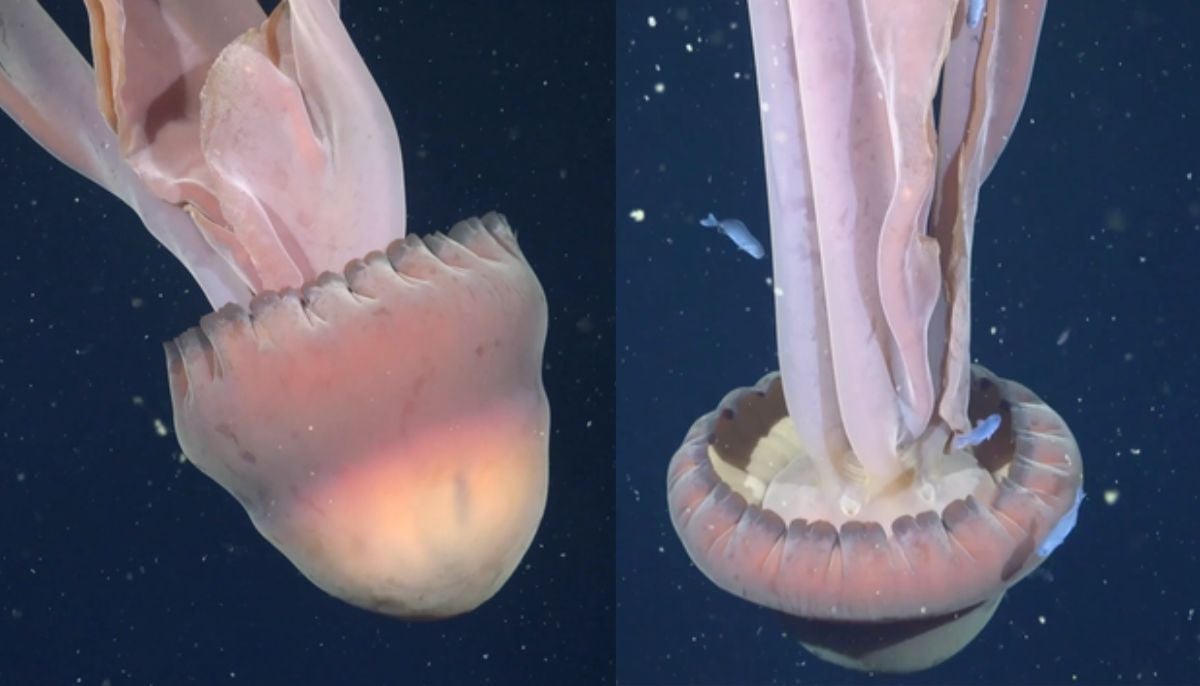 Rare deep-sea discovery: ‘School bus-size’ phantom jellyfish spotted in Argentina
 -
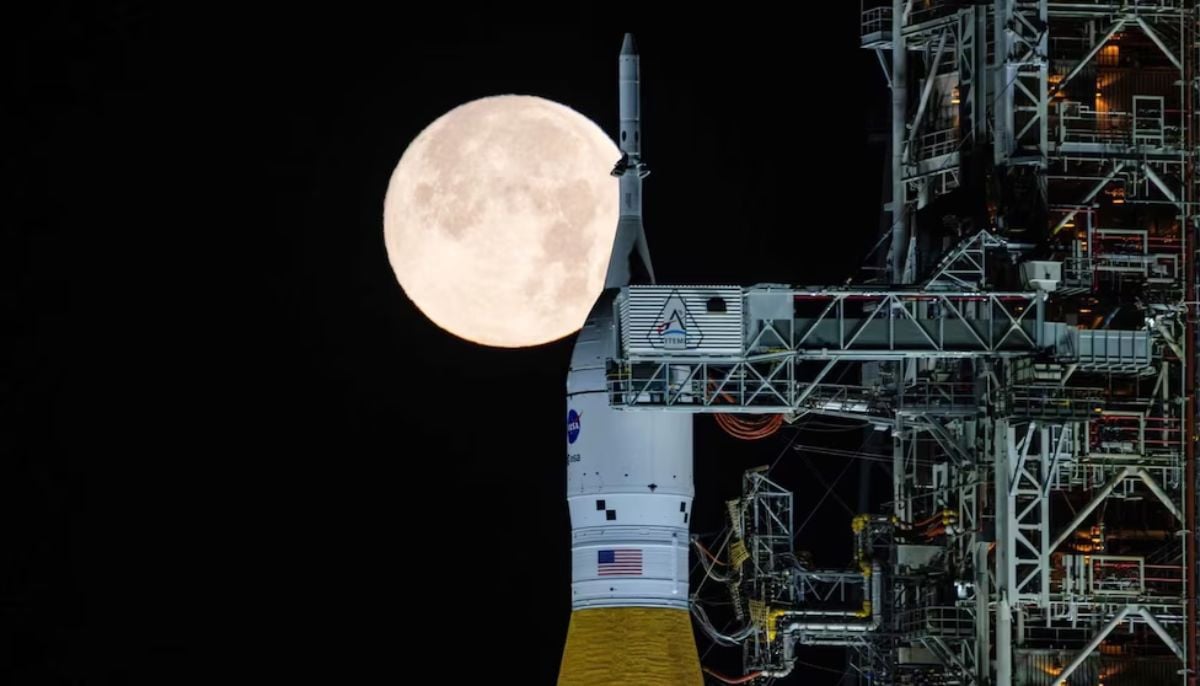 NASA eyes March moon mission launch following test run setbacks
 -
 February offers 8 must-see sky events including rare eclipse and planet parade
 -
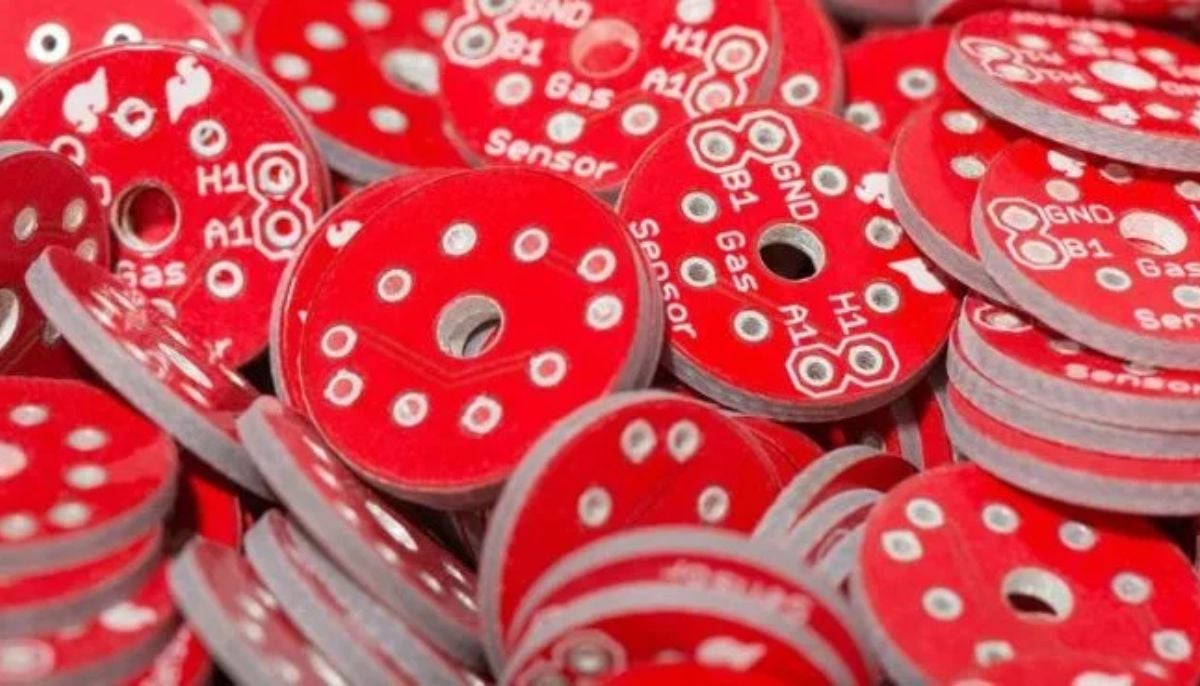 New study reveals biodegradable chip aims to reduce e-waste and air pollution