
Saturn finally has its first Trojan asteroid
Trojan asteroids are space rocks that share planet's orbit, says scientist
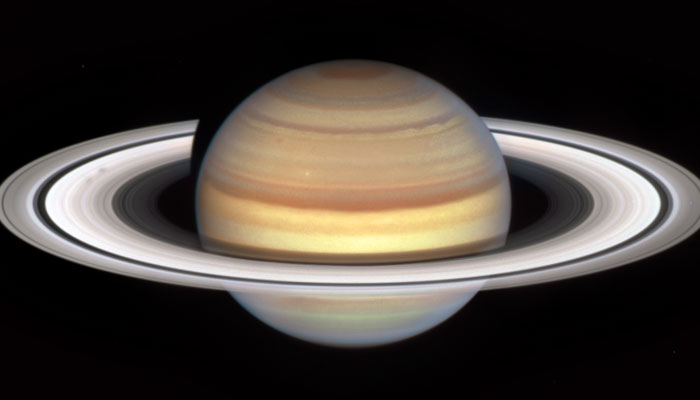
Gaseous giant Saturn seems to have snatched its first known Trojan asteroid “2019 UO14” when the space rock was “bouncing” around the solar system a few thousand years ago.
With the help of this celestial event, Saturn has finally joined its fellow solar system planets as the parent of trailing asteroids called “Trojans”, reported Space.
However, it has been revealed that the gas giant may have cheated a little to fit in with its contemporaries, Jupiter, Neptune and Uranus.
As the orbit of this Saturnian Trojan is unstable, Saturn appears to be a terrible parent, which will lose this cosmic hanger-on in around 1,000 years.
This means that astronomers will have to play their part in hunting for more asteroids sharing an orbit with Saturn, especially if the “ringed planet” wants to hang with its fellow gas and ice giants.
It is worth noting that even smaller terrestrial planets like Earth and Mars also have Trojans.
"We think it is about 9 miles (15 kilometres) across, though its composition is unknown, it probably originated from the Kuiper Belt beyond Neptune," discovery team member Paul Wiegert said.
He added: "The Trojan asteroid was in the process of gravitationally 'bouncing' between the giant planets when it got snagged by Saturn."
Furthermore, Wiegert explained that Trojan asteroids are space rocks that share a planet's orbit, which is either remaining ahead of or behind the planet.




-
 Archaeologists recreate 3,500-year-old Egyptian perfumes for modern museums
 -
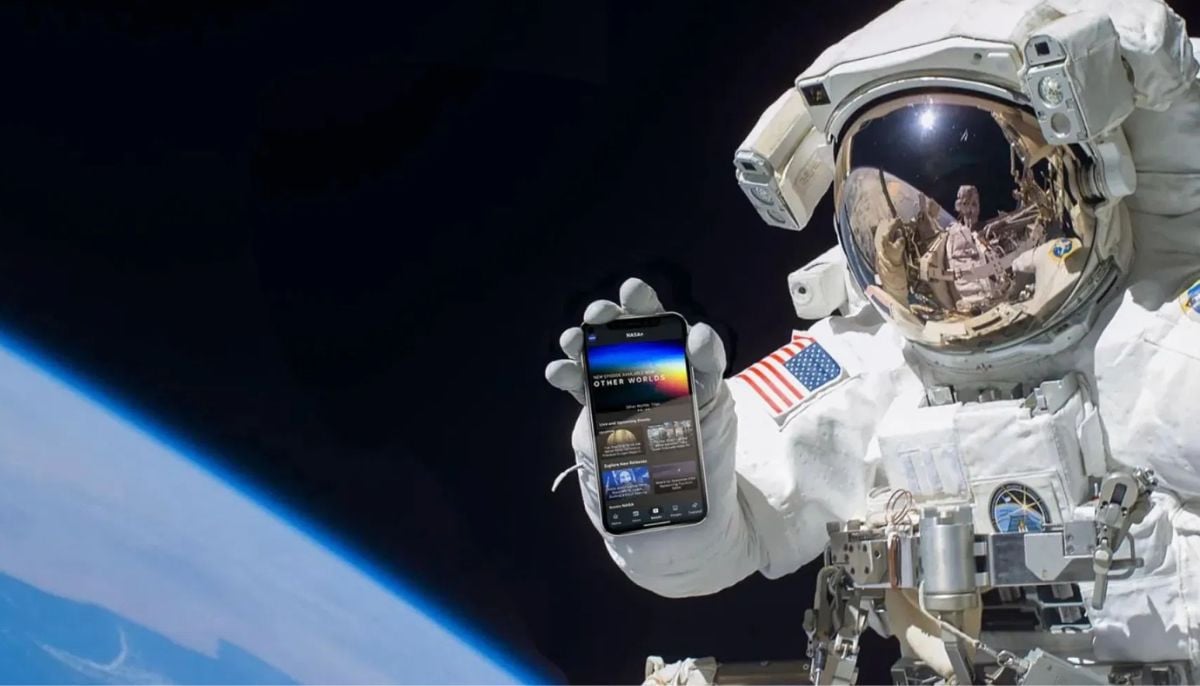 Smartphones in orbit? NASA’s Crew-12 and Artemis II missions to use latest mobile tech
 -
 Rare deep-sea discovery: ‘School bus-size’ phantom jellyfish spotted in Argentina
 -
 NASA eyes March moon mission launch following test run setbacks
 -
 February offers 8 must-see sky events including rare eclipse and planet parade
 -
 New study reveals biodegradable chip aims to reduce e-waste and air pollution
 -
 Scientists unveil new robotic mission for the moon
 -
 NASA reschedules Artemis II rehearsal due to Florida arctic outbreak