
SpaceX Falcon 9 rockets grounded after second stage malfunction
Malfunction takes place during launch of rescue mission for two stranded astronauts at ISS
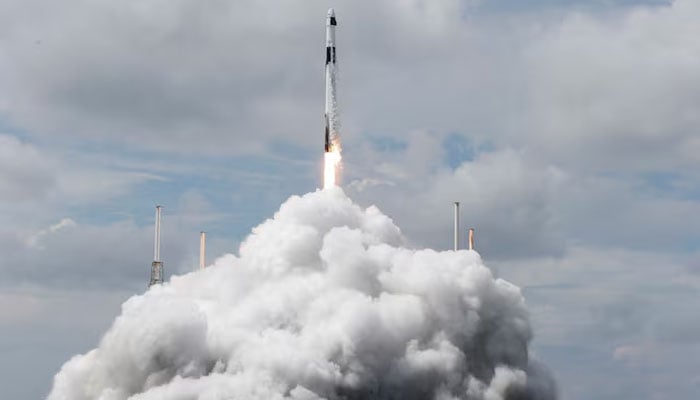
Elon Musk founded corporation SpaceX has grounded its Falcon 9 rockets temporarily after they faced a malfunction during the launch of a rescue mission for two astronauts, who were stranded aboard the International Space Station (ISS).
On Saturday, a Crew Dragon spacecraft to the ISS was delivered by the launch from Cape Canaveral Space Centre in Florida on Saturday. At the ISS, Nasa astronauts Butch Wilmore and Sunita Williams have been stranded since the malfunction of their Boeing Starliner craft forcing it to return to the Earth empty earlier this month, reported The Independent.
Moreover, SpaceX said its Falcon 9’s second stage encountered an issue while coming back to Earth after sending the Crew Dragon into orbit.
“After today’s successful launch of Crew-9, Falcon 9’s second stage was disposed in the ocean as planned, but experienced an off-nominal deorbit burn,” the company said after the launch.
“As a result, the second stage safely landed in the ocean, but outside of the targeted area. We will resume launching after we better understand root cause,” the statement added.
Notably, the Dragon capsule successfully docked with the ISS and is anticipated to return the astronauts to Earth in February.
Moreover, with SpaceX completing 96 orbital launches so far in 2024, the recent Falcon 9 launch was the 90th this year, equalling its previous record set in 2023.
Delivering Starlink satellites to space, the next Falcon 9 launch was due to take place on Sunday but the mission remains grounded until the issue is sorted.
Additionally, the next-generation Starship rocket of SpaceX, which is the biggest rocket ever built, has also been grounded until regulators complete safety and environmental checks.




-
 Total Lunar eclipse: What you need to know and where to watch
 -
 Sun appears spotless for first time in four years, scientists report
 -
 SpaceX launches another batch of satellites from Cape Canaveral during late-night mission on Saturday
 -
 NASA targets March 6 for launch of crewed mission around moon following successful rocket fueling test
 -
 Greenland ice sheet acts like ‘churning molten rock,’ scientists find
 -
 Space-based solar power could push the world beyond net zero: Here’s how
 -
 Hidden ‘dark galaxy' traced by ancient star clusters could rewrite the cosmic galaxy count
 -
 Astronauts face life threatening risk on Boeing Starliner, NASA says