
90-million-year old dinosaur, who ate grass, finally found
Argentine scientists discover 90-million-year old herbivorous dinosaur
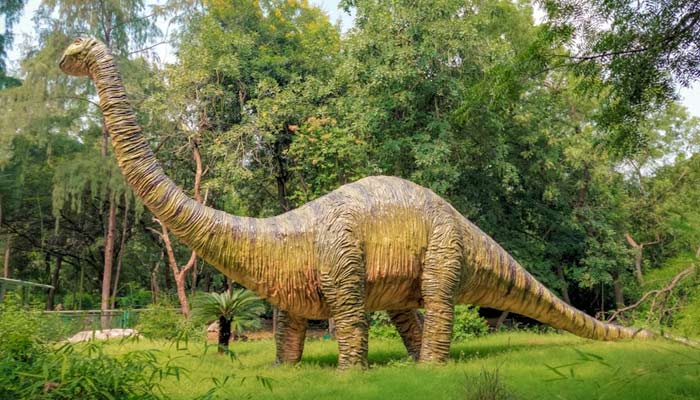
A new medium-sized herbivorous dinosaur, which lived about 90 million years ago in the Late Cretaceous period in present day Patagonia, has been discovered by paleontologists from Argentina.
Named, Chakisaurus nekul and found in the Pueblo Blanco Natural Reserve, in the southern province of Rio Negro, was found to be a fast runner, according to The Economic Times.
Chakisaurus reached 2.5 metres or 3 metres long and was 70 centimetres high (8 to 10 feet long and 27 inches high), as per scientists.
As per new yielded findings about Chakisaurus, the animal had its tail curved unusually downward.
"This new species, Chakisaurus nekul, was a bipedal herbivore that among its most important characteristics had a tail that, unlike other dinosaurs, which was horizontal, had a downward curvature," said Rodrigo Alvarez, author of the study.
"It is something super new for these animals. In addition, it is known that it was a good runner, which was something it needed because it lived with a large number of predators and its only defense was to be faster than them," he added.






-
 Nobel-winning scientist resigns from Columbia university after Epstein links revealed
 -
 At least 30 dead after heavy rains hit southeastern Brazil, 39 missing
 -
 Japan plans missile deployment near Taiwan by 2031 amid growing regional tensions
 -
 Trump delivers longest State of Union address in history: Inside key details on economy, security and global strategy
 -
 Trump’s 2026 State of Union address: Inside key takeaways, major policy shifts & top announcements
 -
 Rep. Al Green removed from House chamber during Trump’s State of Union address: Here’s what happened
 -
 Bill Gates breaks silence on Epstein links, ‘took responsibility for his actions’ during town hall meeting
 -
 President Donald Trump delivers the traditional State of the Union address to Congress