
Horsehead Nebula image reveals shocking details
Nasa James Webb Space Telescope captures Horsehead Nebula
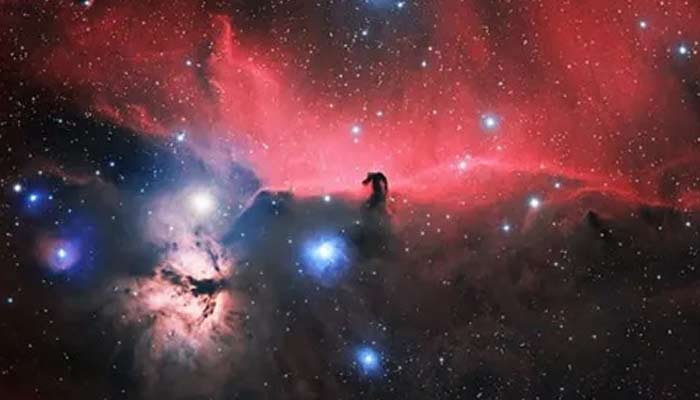
Horsehead Nebula has been captured by Nasa’s James Webb Space Telescope and minute details of one of our Milky Way galaxy’s most stunning celestial objects have been revealed.
Close-ups of the molecular cloud’s gas waves rising up inside the constellation of Orion, were photographed by the most powerful telescope ever designed.
Revealing detail in the edges of the equine-shaped nebula’s “mane”, infra-red imaging was utilised to capture the images 1,300-million light years away from Earth.
Illuminated by a hot young star embedded in its top left edge, the Horsehead Nebula is a collapsing cloud of dense and cool gas.
This nebula, which looks distinctive because of the horse-like structure due to lighter gas being eroded. Consequently, a thick pillar of dense gas and dust that is harder to erode has surfaced.
However, this is expected to not last longer. Even this pillar of denser matter will be gone in around 5 million years as estimated by the scientists, according to Space.
A stunning image of part of the Horsehead Nebula was also taken by JWST's other primary camera, the Mid-Infrared Instrument (MIRI). With thick white and blue smoke punctuated by dark voids, a small portion of the nebula fills over half of this image.



-
 ‘Mars’ missing water mystery takes a surprising turn as new study finds regional dust storms trigger massive water loss into space
 -
 Scientists reveal how sleeping can unlock your creative potential
 -
 NASA Artemis 2 moon mission faces unexpected delay ahead of March launch
 -
 Total Lunar eclipse: What you need to know and where to watch
 -
 Sun appears spotless for first time in four years, scientists report
 -
 SpaceX launches another batch of satellites from Cape Canaveral during late-night mission on Saturday
 -
 NASA targets March 6 for launch of crewed mission around moon following successful rocket fueling test
 -
 Greenland ice sheet acts like ‘churning molten rock,’ scientists find