
Does sleeping less lead to hypertension, blood pressure?
High blood pressure is drastically linked to person's sleeping hours
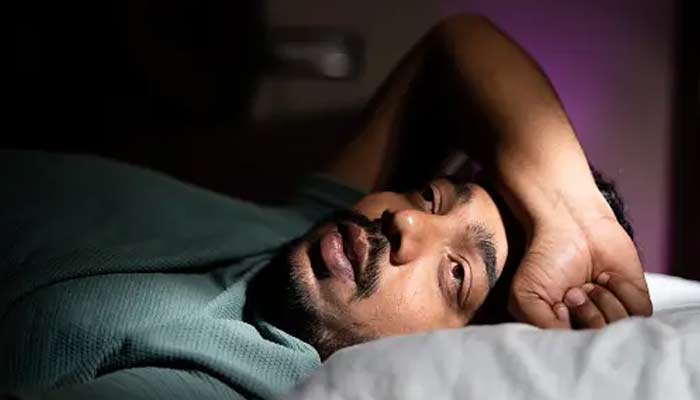
A recent study found that sleeping less than seven hours a night is linked to an increased risk of high blood pressure over time.
The authors of the study accepted that there is no scientific proof linking sleep patterns to hypertension, or elevated blood pressure, according to Medical News Today.
They did, however, note that prior evidence of the association has been inconsistent.
The data included incidences of hypertension across follow-up periods ranging from 2 to 18 years (with a median of 5 years) in 1,044,035 individuals in six nations who did not have a history of high blood pressure.
The researchers found that even after controlling for demographic and cardiovascular risk factors such as smoking, blood pressure, body mass, index, gender, and age, those who slept for shorter durations of time had a notably increased chance of developing hypertension.
For individuals who slept for less than five hours, the correlation was considerably more pronounced.
“Based on the most updated data, the less you sleep — that is less than seven hours a day — the more likely you will develop high blood pressure in the future,” said Dr Kaveh Hosseini, the study’s principal investigator and an assistant professor of cardiology at the Tehran Heart Center in Iran.
Less than seven hours of sleep was linked to a 7% higher risk of high blood pressure, according to the research team. When the length of sleep was shorter than five hours, this percentage rose to 11%.



-
 Lamar Odom details struggle with addiction and ‘amazing’ rehab experience
 -
 Hilary Duff details how she protected her children’s mental health amid divorce
 -
 Courtney Love recalls how ‘comparison’ left Marianne Faithfull ‘broken’
 -
 Katherine Short became vocal ‘mental illness’ advocate years before death
 -
 Demi Lovato claims fans make mental health struggle easier
 -
 6 celebrities who have been vocal about anxiety and 'panic attacks'
 -
 Lewis Capaldi details 'impact of Tourette' on his career
 -
 Christina Applegate struggles to leave bed amid multiple sclerosis battle