
How to capture a perfect eclipse picture using a smartphone?
A total solar eclipse is going to take place on April 8, 2024, across US
A total solar eclipse is going to take place on April 8, 2024, across the United States, and with the right tips and tricks, you can click the perfect photograph of the eclipse using a smartphone, US Today reported.
The breathtaking event will be the country's first total eclipse since 2017.
National Aeronautics and Space Administration (NASA) reports that the complete solar eclipse will be wider in diameter than the last one, as the moon will be a few thousand miles closer to Earth on April 8.
According to NASA, it will be the last total solar eclipse to occur until August 23, 2044, and will be partially viewable in all 48 contiguous states.
As the eclipse will move across Texas and finally out of Maine, certain areas will even be able to witness its totality.
Here are some tips on how to click the perfect eclipse picture using a smartphone:
- Switch off the flash before totality. This ruins the pixels and obstructs the view.
- Don't zoom in on the eclipse. Zooming reduces the quality of the picture, making it look grainy, Space reported.
- Go super wide-angle or portrait; doing this will capture the whole horizon.
- Lock focus during totality; this is the most important step. Focusing on the right time with the right amount of brightness is the key to a good eclipse photo.
- Use burst mode during totality. The highlight of the eclipse is the diamond ring, which occurs for just a split second, so photographing it in burst mode will increase your chances of clicking the perfect picture.
- Shoot totality in RAW image format. This would retain the original sensor data and skip the built-in processing your smartphone automatically applies to JPEGs.
- It is better to shoot video using a tripod or support so that you can be hands-free and enjoy the view.




-
 Archaeologists recreate 3,500-year-old Egyptian perfumes for modern museums
 -
 Smartphones in orbit? NASA’s Crew-12 and Artemis II missions to use latest mobile tech
 -
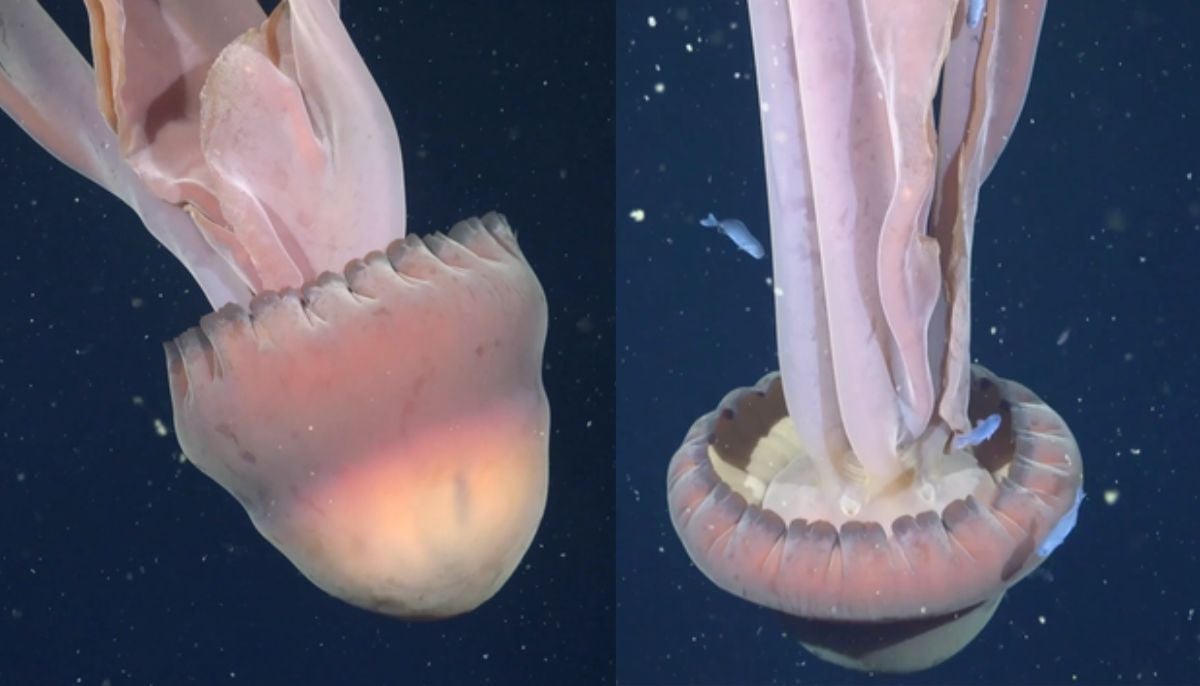 Rare deep-sea discovery: ‘School bus-size’ phantom jellyfish spotted in Argentina
 -
 NASA eyes March moon mission launch following test run setbacks
 -
 February offers 8 must-see sky events including rare eclipse and planet parade
 -
 New study reveals biodegradable chip aims to reduce e-waste and air pollution
 -
 Scientists unveil new robotic mission for the moon
 -
 NASA reschedules Artemis II rehearsal due to Florida arctic outbreak