
World's most dangerous ocean crossing: Here's everything to know about Drake Passage
Drake Passage remains world's most terrifying ocean crossing yet most thrilling for sea explorers
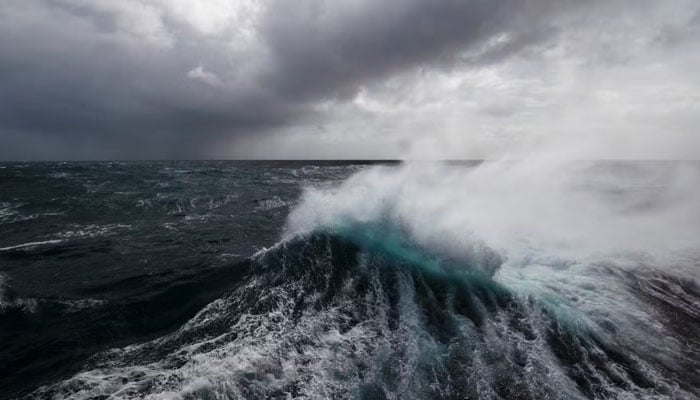
Sailors are equally inspired and terrified by the world's most terrifying ocean crossing called Drake Passage located at the end of six hundred miles of open sea with some of the most difficult weather on Earth and is an equally hostile region of snow and ice.
When explorer Ernest Shackleton crossed it in a small lifeboat in 1916, Alfred Lansing described it as "the most dreaded bit of ocean on the globe – and rightly so." Drake Passage links the southernmost point of the Antarctic Peninsula with the southernmost tip of the continent of South America, according to CNN.
Not simply because it can take up to 48 hours to cross, but also because it is becoming an increasingly difficult task for tourists visiting Antarctica. The Drake was once the domain of adventurers and sea dogs. Part of the appeal of visiting the "white continent" for many people is the ability to brag about having survived the "Drake shake."
But why do those "shakes," during which the ships are battered by waves up to fifty feet high? And how do sailors go across the most treacherous oceans on Earth?
It turns out that the Drake is a fascinating area for oceanographers because of what's happening beneath those churning waters' surface. It's a challenge that ship commanders must take on with a fair dose of apprehension.
The Drake is unquestionably a large body of water, measuring up to 6,000 metres (almost four miles) deep and 600 miles wide. That is, to us. Less so to the world in its entirety.
Tourists visit the Antarctic Peninsula, which isn't even part of Antarctica. It resembles a tectonic rendition of Michelangelo's "Creation of Adam" in the Sistine Chapel. The peninsula is narrowing, rotating northward from the massive continent of Antarctica and stretching towards the southern tip of South America.
The ocean is rushing into the space between the continents as a result, creating a pinch point effect as the water is squeezed between the two land masses.





-
 Nobel-winning scientist resigns from Columbia university after Epstein links revealed
 -
 At least 30 dead after heavy rains hit southeastern Brazil, 39 missing
 -
 Japan plans missile deployment near Taiwan by 2031 amid growing regional tensions
 -
 Trump delivers longest State of Union address in history: Inside key details on economy, security and global strategy
 -
 Trump’s 2026 State of Union address: Inside key takeaways, major policy shifts & top announcements
 -
 Rep. Al Green removed from House chamber during Trump’s State of Union address: Here’s what happened
 -
 Bill Gates breaks silence on Epstein links, ‘took responsibility for his actions’ during town hall meeting
 -
 President Donald Trump delivers the traditional State of the Union address to Congress