
Why China hates William Lai Ching-te, Taiwan's new president-elect
President-elect Lai Ching-te of Taiwan promises to defend self-governing island against "intimidation" from China
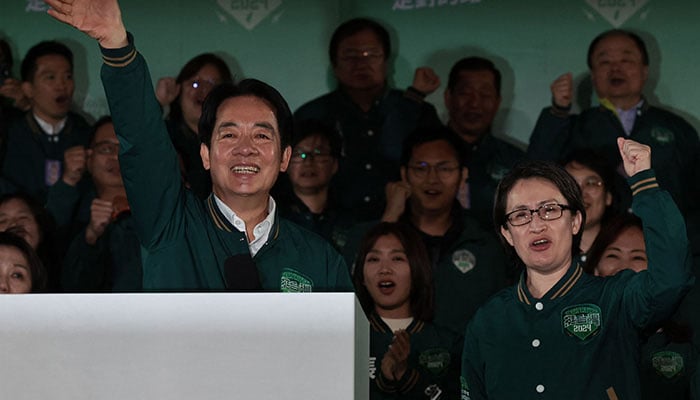
Taiwan's presidential election was won by William Lai Ching-te of the ruling Democratic Progressive Party (DPP) in spite of China's advice not to back him.
China claims Taiwan as part of its territory, and on Saturday, President-elect Lai Ching-te of Taiwan promised to defend the self-governing island against "intimidation" after voters rejected Beijing's threats and massively supported him in the election, according to AFP.
Beijing has characterised Lai as a threat to stability in the unstable region. Nevertheless, Lai won an unprecedented third consecutive term for the DPP in the poll after an intense campaign in which he positioned himself as the defender of Taiwan's democratic way of life.
Divided from the mainland by a strait of 180 kilometres (110 miles), Communist China claims the democratic Taiwan, and it is prepared to use force to achieve "unification" even in the absence of an immediate threat to peace.
Beijing, which warned voters to stay away from Lai and called him a "severe danger" before the election, said the results would not stop "the inevitable trend of China's reunification."
During his victory address, Lai committed to protect Taiwan from Chinese invasion while simultaneously keeping peace and stability in the Taiwan Strait.
"We are determined to safeguard Taiwan from continuing threats and intimidation from China," he told supporters.
Following the tabulation of votes from each polling location, the Central Election Commission declared that Lai had garnered 40.1% of the overall vote, surpassing the 33.5% received by opposition Kuomintang (KMT) candidate Hou Yu-ih.
Beijing and Washington, were closely watching the election as the two titans fought for sway in the strategically crucial region.
Lai thanked the people of Taiwan for "writing a new chapter in our democracy" and for listening to China's one-party state's warnings and threats.
He said that he would also make an effort to develop contacts with China. "We are telling the international community that between democracy and authoritarianism, we will stand on the side of democracy," he added.



-
 Travis Kelce's mom Donna Kelce breaks silence on his retirement plans
 -
 Hailey Bieber reveals KEY to balancing motherhood with career
 -
 Hillary Clinton's Munich train video sparks conspiracy theories
 -
 Woman jailed over false 'crime in space' claim against NASA astronaut
 -
 Columbia university sacks staff over Epstein partner's ‘backdoor’ admission
 -
 Ohio daycare worker 'stole $150k in payroll scam', nearly bankrupting nursery
 -
 Michelle Yeoh gets honest about 'struggle' of Asian representation in Hollywood
 -
 US, China held anti-narcotics, intelligence meeting: State media reports