
Leonid meteor shower to peak this weekend — Here's how you can watch it
Leonid meteors will be visible over most of northern hemisphere, but clear skies are required to observe them
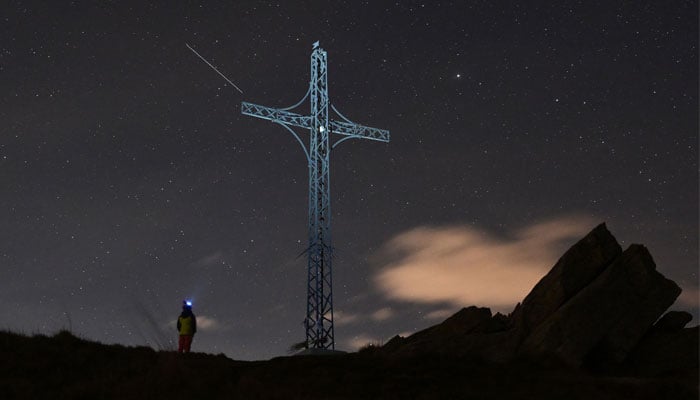
The Leonids, a highly prolific annual meteor shower will be visible across the skies around the world during the early hours over the weekend and it will reach its peak between midnight and dawn.
The shower which is known for its fast and bright meteors can be seen with the naked eye on Saturday and Sunday, but weather conditions may affect its visibility, BBC reported.
The Leonids, named after the constellation Leo, are a shower associated with Comet Tempel-Tuttle, which leaves a path of tiny debris around the sun which, upon entering our planet's atmosphere at speeds of up to 43 miles (70km) per second, vaporises and creates meteors, which are spectacular light streaks.
"They can be very bright because they're moving very quickly, so they may look slightly more green or slightly more blue," said Dr Affelia Wibisono, an astronomer at the Royal Observatory Greenwich.
"Sometimes we get fireballs as well during the Leonids and they can outshine a star or a planet."
How can you watch this year's Leonid meteor shower?
The meteors will be visible over most of the northern hemisphere, but clear skies are required to observe them.
Dr Wibisono predicts that the moon will set early on Friday evening, resulting in a dark sky and a higher chance of seeing meteors if the weather permits. To observe the meteor shower, find a dark spot away from city lights with a wide-open vista.
"It should be something quite fun to view and something really worth going outside and having to look for," said Dr Wibisono.
"I think the great thing about meteor showers is that they are easy to see, you don't need equipment, all you need to do is look up."
The Royal Observatory Greenwich advises that meteor-hunting is a waiting game, so bring a comfortable chair and warm clothing.
Don't be sad if you don't see them over the weekend because they can be spotted until November 30, as they are at their best.




-
 Annular solar eclipse 2026: Where and how to watch ‘ring of fire’
 -
 Scientists discover rare form of 'magnets' that might surprise you
 -
 Humans may have 33 senses, not 5: New study challenges long-held science
 -
 Northern Lights: Calm conditions persist amid low space weather activity
 -
 SpaceX pivots from Mars plans to prioritize 2027 Moon landing
 -
 Dutch seismologist hints at 'surprise’ quake in coming days
 -
 SpaceX cleared for NASA Crew-12 launch after Falcon 9 review
 -
 Is dark matter real? New theory proposes it could be gravity behaving strangely