
Johnny Kitagawa: J-pop agency head steps down over uncle's sex crimes
Johnny Kitagawa had sexually abused hundreds of adolescents and young men over the course of six decades
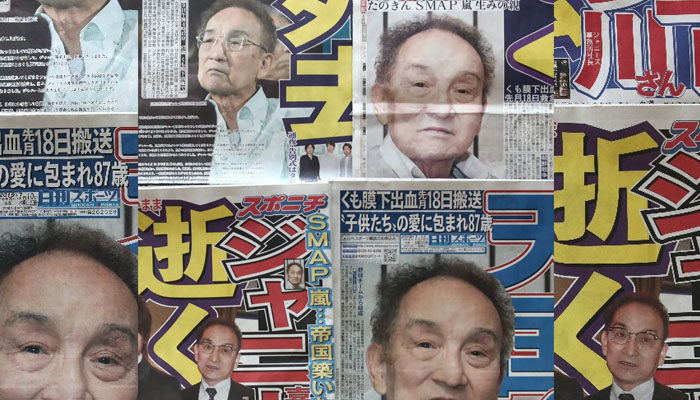
Julie Fujishima, Johnny Kitagawa's niece has resigned as the head of Japan's largest pop agency on Thursday as an act of atonement to her uncle's victims of sexual abuse.
On Thursday, Julie Fujishima announced her resignation from Johnny and Associates while publicly apologising to her uncle's victims.
Her dismissal comes a week after authorities discovered Kitagawa, who was the chairman of the boyband agency, had sexually abused hundreds of adolescents and young men over the course of six decades.
More victims came forward this year as a result of a BBC documentary on the abuse.
2019 saw the death of Johnny Kitagawa, who always denied guilt. He was never prosecuted.
His niece and outgoing CEO Julie Fujishima admitted his abuse for the first time on Thursday.
"Both the agency itself and I myself as a person recognise that sex abuse by Johnny Kitagawa took place," she said.
"I apologise to his victims from the bottom of my heart."
Some of the victims were seen by local reporters observing the press conference, some of whom were clearly angry.
In terms of scope and effects on the business, the crisis is comparable to that involving former Hollywood mogul Harvey Weinstein, who was found guilty of rape and sexual assault.
Perhaps the most significant and powerful person in Japan's entertainment sector was Kitagawa. For many young men throughout the years, his agency served as the entry point to celebrity.
In the BBC documentary Predator: The Secret Scandal of J-Pop, a number of victims expressed concern for their careers if they refused to submit to Kitagawa's sexual demands.
His abuse had been the subject of rumours and some media stories for years, but nothing much was done about it.
The pop magnate was never charged with a crime and worked with young men until he passed away at the age of 87 four years ago.
His passing was a national tragedy, and even the current prime minister extended sympathies.
And even though some of the accusations were established in a civil court while he was still alive, Kitagawa was successful in at least one defamation lawsuit. For decades, the majority of the Japanese mainstream media did not publish the charges, leading to claims of a cover-up by the business.
Then, in March, the BBC's exposé of Kitagawa's mistreatment was shown, igniting debate in Japan and calls for a thorough inquiry. Additionally, thousands of J-pop enthusiasts signed a petition calling for an investigation into the agency.





-
 US on high alert after overnight joint-military strikes on Iran: FBI
 -
 Pentagon used Anthropic’s Claude AI in Iran attack despite ban: report
 -
 Expert reveals what makes investigations hard in search of Savannah Guthrie mother Nancy: 'Silent witness'
 -
 Austin shooting leaves multiple dead, dozens injured
 -
 US and Israeli strikes on Iran: Everything you need to know
 -
 US strikes on Iran ignite emergency push for powers legislation: Report
 -
 What happened to Ayatollah Ali Khamenei's family during US -Israel attack on Iran
 -
 Talk show host drops hint about Taylor Swift, Travis Kelce wedding date