
Taylor Swift's Eras Tour is good news for local economies
The international leg of the Eras Tour will commence next month
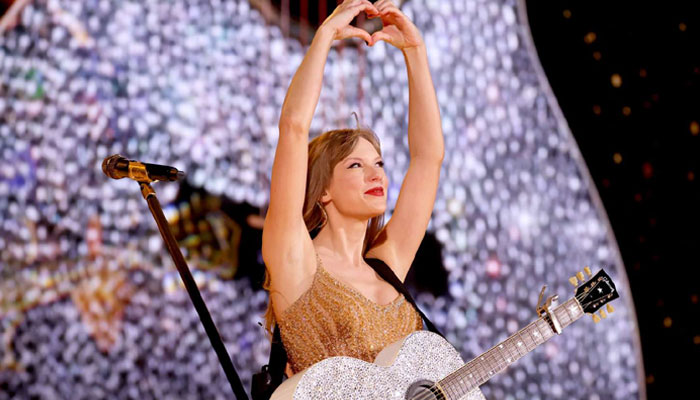
Since the kick-off of Taylor Swift's highly-anticipated Eras Tour, many feats have been achieved, records have been broken, and businesses have cashed in on the Swifties craze.
The local economies graph is going up as governors of different states eagerly welcome the titan of the entertainment industry with open arms.
One of the estimates put out by the economists is that the spending splash caused by the highly successful tour can hover over $4 billion in the United States, as per ABC7.
An average Swifty is reported to shell out almost $1,300 as the fans attend her shows in different cities and plan the complete trips out of it.
"Right now, we are probably close to $2,000. In total, with the hotel, everything," Santa Rosa native Dennis Zalamea told the outlet.
Earlier, On July 22 and 23, Swift had concerts in Seattle. After two nights of shaking a leg, a mini earthquake occurred.
The seismology expert confirmed that the continued jumping and dancing caused seismic activity identical to a 2.3 magnitude earthquake.
As per geology professor at Western Washington University, Jackie Caplan-Auerbach said, ""I grabbed the data from both nights of the concert and quickly noticed they were clearly the same pattern of signals," she said, adding, "If I overlay them on top of each other, they're nearly identical."



-
 Gracie Abrams breaks silence after losing 2026 BRIT Award
 -
 Jennifer Garner reveals the actress who 'carried through things'
 -
 Liza Minelli makes bombshell claim about late mother Judy Garland’s struggle with drugs
 -
 Matthew McCoughaney reveals one 'gift' he achieved with losing nearly 50 pounds
 -
 Bhad Bhabie drops worrying health update amid cancer battle: 'God has the last say'
 -
 Hollywood producers sound alarm over major fear on Paramount-Warner Bros. deal
 -
 'Bridgerton' star Phoebe Dynevor revealed her most hated trait
 -
 'The Sopranos' creator recalls one major change to show which changed TV history